- NSIB opens probe into Challenger 604 door separation incident
- Private jet forced into emergency landing in Abuja after door detaches
- NAMA spokesman, Musa honoured with prestigious 'Dan Kade of Kontagora' title
- The sky has no gender
- Surging revenues, strong balance sheet drive United Nigeria’s pioneer ₦100bn debt programme



Africa records highest global baggage mishandling rate despite 23% drop, SITA report
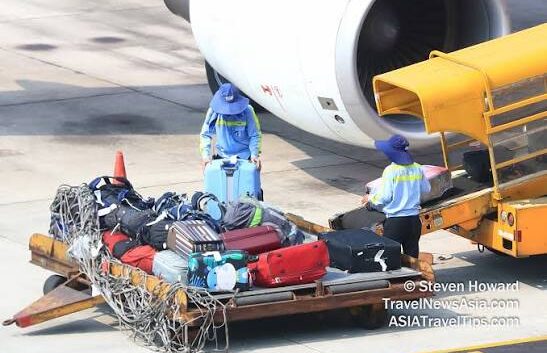
- Lost, baggage manhandling cost global aviation $6.3 billion annually

The global aviation industry is making significant strides in tackling baggage mishandling, but Africa continues to lag behind, recording the highest baggage mishandling rate of any region globally.
According to the newly released 2026 SITA Baggage IT Insights Report—the 20th annual edition of the industry benchmark—airlines and airports worldwide slashed global mishandling rates by 23% in 2025.

However, Africa remains a stark outlier, recording an alarming 12.1 mishandled bags per 1,000 passengers.
The report attributes Africa’s high mishandling rates to a combination of capacity pressures, ageing infrastructure, and the complexities of international travel. Journeys involving multiple airlines, airports, and baggage handlers (interlining) continue to create significant loopholes for baggage disruption across the continent.
Despite these challenges, SITA identifies Africa as the region with the greatest opportunity to leapfrog current limitations.
The report suggests that the continent can drastically improve its baggage performance by adopting end-to-end baggage tracking, real-time data sharing, Biometric solutions and AI-powered predictive routing.
A solid foundation for this transition is already underway. Industry-wide baggage tracking under IATA Resolution 753 has now surpassed 50% globally, with full compliance targeted by 2027.
While the global industry celebrated its strongest progress outside the pandemic era—even as passenger volumes surged to 5 billion in 2025—the financial drain remains staggering.
Baggage mishandling still costs the global aviation industry $6.3 billion annually, averaging $260 per mishandled bag.
With the industry’s net profit averaging a razor-thin $8 per passenger, the economics are brutal: one mishandled bag wipes out the profit of more than 30 seats sold, while five mishandled bags completely erase the profit of an entire flight.
According to SITA, delayed bags account for roughly 70% of these total costs (mostly operational recovery, rerouting, and delivery), while lost or damaged bags consume the remaining 30%, driven primarily by passenger compensation. Transferring bags between flights remains the primary culprit, accounting for 39% of all mishandling cases in 2025.
What drove the 23% global reduction in 2025 was a fundamental shift toward digital interconnectedness. Technologies like real-time data sharing, biometric bag drops, and AI routing are redefining the passenger experience.
“Baggage is shifting from a logistical problem to a digital service,” said Nicole Hogg, Portfolio Director of Baggage at SITA. “Passengers expect to know where their bag is at every moment… The next phase is about bringing the technology we already have to every transfer, every handler, and every airport.”
As passenger volumes rise faster than airport expansions can keep up, aviation executives are turning to tech over concrete.
David Lavorel, CEO at SITA, noted: “Airports are operating closer to their physical limits every year, and the answer isn’t always more concrete. Data, AI, and predictive operations let us get more out of the airport we already have. Solutions such as Total Airport Management take the same approach across the whole lifecycle, so airports can absorb growth without expanding their footprint.”
The trajectory moving forward is clear: three in four airlines plan to invest in AI over the next two years, and half plan to provide passengers with real-time baggage updates. For Africa, accelerating the adoption of these digital tools will be critical to lowering its double-digit mishandling rate and protecting airline margins.
Google+

That’s a really interesting contrast – it makes you think about the challenges of infrastructure and operational systems in different parts of the world.