- Air Peace, NCAA lock horns over performance metrics
- Berthe: African Airlines struggle with minimal profit margins amid rapid passenger growth
- Airlines link airport congestion, bad weather as causes of delays
- Sustainable Growth: Dissecting aviation stakeholders' position on sector's issues
- Part 1: Apologies for the Delay, Rethinking Culture of Late, Postponed, Cancelled Flights in Nigeria



Air Peace, NCAA lock horns over performance metrics

- Airline accuses regulator of skewed August operational audit
- Achimugu hits back at carrier, defends flight disruption metrics

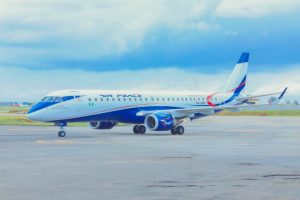
A fierce regulatory row has erupted in Nigeria’s aviation sector as the nation’s flag carrier, Air Peace, and the apex industry regulator, the Nigeria Civil Aviation Authority (NCAA), trade strong words over the credibility of flight performance and delay metrics released for August 2026.
Air Peace triggered the dispute by rebutting the regulator, accusing the agency of releasing fundamentally flawed and misleading flight disruption figures.

The airline claimed the NCAA systematically omitted more than 700 of its fully operational flights from the official audit, an oversight that artificially inflated its disruption percentages and unfairly harmed its brand reputation.
Internal operational records cited by Air Peace paint a starkly different picture from the NCAA audit. While the regulator’s report captured 1,864 flights for August, the airline’s internal sector logs confirm that it actually executed 2,564 completed operations within the month under review.
Detailing the carrier’s grievances, Air Peace’s Chief Operating Officer, Oluwatoyin Olajide, raised severe questions regarding the timing, structure, and methodology behind the NCAA’s data publication.
She questioned why the regulator abruptly skipped publishing equivalent monthly metrics for July after releasing its combined Q1 and Q2 report on July 31, and instead hastily published an isolated August audit just 13 days after the month ended.
Olajide stressed that the NCAA report completely ignored major operational shocks that crippled the domestic aviation grid during the period.
Chief among these was a disruptive 14-day union picketing action that commenced on August 11, severely distorting crew schedules, forcing major flight re-allocations, and causing massive compounding network backlogs.
Beyond industrial disputes, Olajide revealed that external factors outside the airline’s control caused significant operational delays.
Systemic ground infrastructure challenges, airport terminal congestion, and air traffic bottlenecks accounted for more than 51 per cent of external disruptions, leaving aircraft idling on taxiways or circling in airborne holding patterns due to constrained runway and ramp capacities.
The airline also pointed to severe fleet bottlenecks caused by unpredictable wildlife strikes and ground equipment damage.
In one major incident in Abuja, a Boeing aircraft (registration 5N-BYG) suffered severe engine inlet cowl damage following a bird strike.
The damage required an estimated $1.8 million in repairs and grounded a key asset that typically handles eight daily sectors and roughly 1,000 passengers for over a week.
Operations were further compounded by ground-handling vehicles colliding with active aircraft, mandatory rainy-season safety holds, and weather-induced diversions.
Consequently, Air Peace called on the NCAA to overhaul its data collection systems and publish detailed causal breakdowns that distinguish an airline’s internal management shortcomings from widespread systemic deficiencies in the sector.
The Director-General of NCAA, Capt. Chris Najomo, who spoke earlier, said it was normal for Air Peace to dispute the report because it is the airline most hit by flight delays and cancellations due to its fleet size.
He, however, said that rather than dispute the data, it serves as an opportunity for the carrier to reflect on its operations.
Najomo had last year directly linked Air Peace’s high rates of flight delays and cancellations to an acute fleet capacity shortage relative to its published flight schedules.
In a swift response, the Director of Public Affairs and Consumer Protection at the NCAA, Mr Michael Achimugu, rejected the airline’s assertions, questioning why Air Peace remains the sole carrier consistently challenging regulatory oversight.
Speaking in an exclusive interview with Aviation Metric, Achimugu stated: “How come other airlines have not come out to dispute the report, and it is only Air Peace that is doing that, complaining that our numbers are skewed? Which other airline has questioned what we do? Only Air Peace. Why are you agreeing that our numbers are skewed and you can then disagree with all of our numbers but say a certain number is not accurate?”
Defending the integrity of the regulatory metrics, Achimugu explained that the figures are compiled using a robust dual-verification approach. First, airlines submit daily operational schedules directly to civil aviation officers stationed at airports nationwide. Second, the NCAA’s field monitoring teams independently track and verify every takeoff and landing.
“So, we do not simply generate these figures based on assumptions; they are derived from official airline submissions as well as our own monitoring,” Achimugu stated, adding that variations in figures often arise when operators fail to report specific schedules to ground officers for internal or financial reasons.
Achimugu stressed that the NCAA’s public performance releases are purely statistical and carried out under high-level ministerial directives, rather than an attempt to embarrass or target any operator.
He noted that the agency frequently exercises discretion in delaying reports to shield struggling airlines from public backlash in an already challenging operating environment.
“What do we stand to gain by deliberately putting any airline out of business? If an airline fails, we also lose revenue and face the consequences. There is absolutely no interest on our part in seeing any airline collapse,” Achimugu affirmed.
Highlighting the regulator’s commitment to consumer protection and industry stability, Achimugu recalled a high-stress incident with United Nigeria Airlines where he personally stepped in to calm over 160 stranded, agitated passengers who threatened violence against airport personnel.
He re-emphasised that the regulatory authority will continue to provide transparent data, balance consumer rights, and work constructively with all operators to maintain a safe, fair, and sustainable aviation ecosystem.
Google+
