- Delta Air Lines to resume seasonal nonstop Lagos–New York flights Dec 2
- Tale of Two Skies: US commits $31b to fix ageing airspace, Nigeria gasps for funds
- Oyedele, Okonkwo task airlines, public institutions, say truth inflicts less damage than cover-up
- FG Introduces VPASS to strengthen airport security, passenger identification
- NSIB: Pressurisation anomaly preceded mid-air door separation on Triton Aviation jet



Tale of Two Skies: US commits $31b to fix ageing airspace, Nigeria gasps for funds
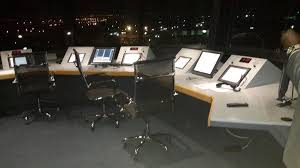
Following a nationwide telecommunications blackout in the U.S., the White House moved within hours to request $30.1 billion for air traffic modernisation. Back home, Nigeria’s airspace manager is forced to keep 20-year-old navigation gear running on 22 per cent of ticket charges and billions in unpaid debts, writes WOLE SHADARE
Across the Atlantic, the alarms ringing inside air traffic control centres sound eerily familiar, yet the financial muscle being deployed to silence them could not be more starkly different.

This past week in Washington, a cascading series of telecommunications and equipment failures triggered a nationwide ground stop that disrupted roughly 20,000 flights and cancelled more than 3,000 services across the United States.

Within hours, the White House and the U.S. Department of Transportation moved with decisive fiscal urgency. Transportation Secretary Sean Duffy and Office of Management and Budget Director Russell Vought dispatched an urgent request to Congress for $30.1 billion (widely cited alongside Federal Aviation Administration rebuilding allocations at $31 billion) in fresh capital to overhaul America’s ageing air traffic control system and airport infrastructure on top of the $12.5 billion lawmakers already approved in July 2025.
In Lagos and Abuja, aviation professionals watched the American response with a mixture of professional recognition and quiet envy.
Not because Nigeria’s airspace suffers from the congestion of New York or Chicago, but because the underlying pathology ageing Communication, Navigation, and Surveillance (CNS) equipment, obsolete software, fragile telecommunications backbones, and deferred capital replacement is precisely what keeps Nigerian air traffic controllers awake at night.
The difference lies in how each nation confronts the bill. While Washington treats airspace modernisation as an urgent national security and economic imperative backed by tens of billions of dollars, Nigeria’s sole Air Navigation Service Provider, the Nigerian Airspace Management Agency (NAMA), remains trapped in a suffocating web of underfunding, statutory revenue disputes, unpaid debts, and foreign exchange pressures.
America’s $31 billion bet
To appreciate the scale of the contrast, one need only examine what the United States is buying with its latest aviation intervention. Even with the world’s busiest and most sophisticated aviation network, U.S. officials acknowledged that decades of incremental patching had left critical facilities relying on legacy computers, copper wiring, paper flight strips, and—in more than 400 facilities outdated floppy disks for weather and flight data.
The new $30.1 billion package requested by the White House, supplementing the $12.5 billion five-year down payment enacted in 2025, targets the exact technological arteries that keep aircraft safely separated in the sky.
Specifically, the proposal earmarks $10.1 billion for air traffic control modernisation, including $7.2 billion for a unified common automation platform and modern controller workstations, and $2 billion for resilient cloud computing.
$2 billion to replace and upgrade ageing FAA air traffic control towers. $18 billion for airport infrastructure projects, including $10 billion to modernise or replace deteriorating terminals.
As Secretary Duffy and OMB Director Vought stated in their letter to lawmakers, the objective is unambiguous: delivering a “resilient telecommunications backbone for air traffic controllers, modern hardware and software, state-of-the-art control towers, and world-class airport infrastructure”.
Major U.S. carriers, American, Delta, United, and Southwest, immediately threw their weight behind the package, recognising that every minute lost to a radar outage or communication blackout bleeds millions of dollars from the broader economy.
Nigeria’s invisible operational burden
Now turn the radar screen toward West Africa. Unlike conventional government ministries whose budgets are dominated by administrative overhead and stationery, NAMA operates in a hyper-technical, dollar-denominated ecosystem where safety cannot be improvised.
Air navigation equipment is never a one-off purchase. Instrument Landing Systems (ILS), Very High Frequency (VHF) omnidirectional ranges, radar heads, Automatic Dependent Surveillance–Broadcast (ADS-B) receivers, and air-to-ground voice communication networks have finite electronic lifespans, typically no more than ten years, before parts become scarce and software falls out of global compliance.
Yet, across Nigeria’s Flight Information Region (FIR), vital surveillance and navigational infrastructure has been stretched far beyond its design life.
Earlier this year, NAMA’s leadership candidly admitted that several navigational instruments across the country had been in continuous service for over two decades, while primary surveillance systems installed after protracted multi-year delays were already nearing obsolescence at the moment of commissioning.
Nigerian air traffic engineers and controllers have shown extraordinary ingenuity and round-the-clock improvisation to keep those systems operational and maintain Nigeria’s enviable safety record over the past decade.
However, professionalism is not a substitute for capital. No aircraft can safely traverse Nigerian airspace without uninterrupted navigation, surveillance, and communication coverage.
Safety cannot be put on hold when the national grid collapses, forcing NAMA to burn vast sums on diesel and alternative power across remote radar and navigational sites nationwide. Nor can the agency skip the mandatory, capital-intensive flight calibration of navigational aids required by the International Civil Aviation Organisation (ICAO).
Every spare part, software license, calibration flight, and radar upgrade is priced in foreign currency.
Starve at source
While the United States debates whether $31 billion on top of $12.5 billion is enough to future-proof its skies, Nigeria has spent most of 2026 locked in a fierce institutional tug-of-war over how to divide an already shrinking pot of aviation revenue.
At the heart of the domestic impasse is the statutory 5 per cent Ticket Sales Charge (TSC) and Cargo Sales Charge (CSS), the lifeblood of Nigeria’s aviation agencies.
For years, under a sharing formula conceived in a vastly different technological era, the Nigeria Civil Aviation Authority (NCAA) has received 56 per cent of the proceeds, leaving NAMA with just 22 per cent, while the remainder is split among the Nigerian Meteorological Agency (NiMet), the Nigerian College of Aviation Technology (NCAT), and the Nigerian Safety Investigation Bureau (NSIB).
A bill currently before the National Assembly seeking to rebalance that formula—trimming NCAA’s share to 40 per cent and raising NAMA’s allocation to 40 per cent—has sparked intense friction across the industry.
Critics of the current structure point out a glaring economic reality: while the NCAA is an economic and safety regulator with minimal physical infrastructure to maintain nationwide, NAMA is the operational backbone running active air traffic control towers, en-route centres, radar stations, and navigational aids at every airport in the country.
Expecting an air navigation provider with massive capital-replacement obligations to survive on 22 per cent of ticket charges, especially after personnel costs and statutory deductions, is akin to asking a cardiac surgeon to operate with a penknife.
Compounding NAMA’s cash crunch is a crippling web of unpaid debts. Internal credit control records that surfaced earlier this year revealed that sister agencies and state-owned airports owed NAMA over ₦25.6 billion, led by the Federal Airports Authority of Nigeria (FAAN) at nearly ₦24 billion, alongside unpaid navigation and service bills from Bauchi, Ogun, and Taraba states.
Overall unpaid receivables owed to the airspace agency have climbed past ₦34 billion. In an environment where NAMA must pay cash upfront in dollars to international original equipment manufacturers (OEMs) for radar spares and communication upgrades, billions of naira trapped on debtor ledgers translate directly into delayed equipment overhauls.
The cost of delay
The airspace squeeze does not exist in isolation; it is part of a broader infrastructure chasm confronting Nigerian aviation.
Just days ago, at the 55th Annual General Meeting of the Nigerian Air Traffic Controllers’ Association (NATCA), industry operators warned that Nigeria faces an estimated $50 billion aviation infrastructure deficit over the next decade if it does not enact decisive financing reforms.
Lesson
The lesson from Washington this week is stark. Even the wealthiest aviation superpower on earth discovered that deferring airspace technology upgrades eventually exacts a painful price in grounded aircraft, stranded passengers, and emergency billions. Technology in aviation waits for no nation; ICAO standards advance relentlessly, and aircraft avionics grow more sophisticated every year.
The bottom line

Nigeria possesses some of the finest air traffic controllers and aviation engineers on the African continent. For years, their skill has compensated for ageing hardware. But human dedication cannot indefinitely substitute for modern radar, resilient communications, and reliable power. As the United States moves to invest $31 billion to secure the future of its skies, Nigeria faces an unmistakable choice: reform how it funds and equips its airspace today, or risk watching its regional aviation-hub ambitions be grounded by deferred maintenance.
Google+