- FAAN MD: Financing talks for Lagos airport rail extension reach advanced stage
- Riding the Tidal Wave: How CITA Energies navigated 20 years of jet fuel volatility
- Delta unveils major upgrade to Delta One, redefines premium long-haul travel
- NSIB opens probe into Challenger 604 door separation incident
- Private jet forced into emergency landing in Abuja after door detaches



Nigeria’s aviation contribution to GDP hits $2.5 billion-AFCAC scribe

- How Nigeria can tap into SAATM potential
The Secretary-General of the African Civil Aviation Commission (AFCAC), Ms Adefunke Adeyemi, said that the Single African Air Transport Market (SAATM) is a strategic roadmap to transform Nigeria into Africa’s aviation powerhouse.

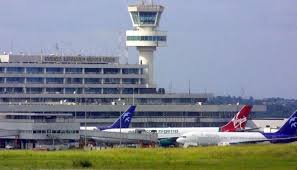
This came as Nigeria saw its aviation’s contribution to the country’s Gross Domestic Product (GDP) increase to $2.5 billion this year from $1.7 billion.
She also stated that Nigeria should focus on the vast opportunities offered by the initiative to liberalise the African aviation industry and transform it into a single market, stressing that the country would benefit from the full implementation of the policy.
Launched in 2018, SAATM’s goal is to boost intra-African trade, tourism, and economic integration by removing restrictions on air services, thereby increasing connectivity, lowering fares, and creating jobs.
The project is a flagship of the African Union’s (AU) Agenda 2063 and aims to expedite the implementation of the 1999 Yamoussoukro Decision.
Her words, “Nigeria has a unique combination of demographic scale, economic strength, and strategic geography that creates unmatched potential in African aviation.”
She noted that Nigeria has the largest population in Africa, the largest economy in Africa, producing a GDP of over $440 billion, and a strategic geographic gateway, situated in an optimal location connecting West, Central, and Southern Africa.
Adeyemi, in her paper at the Federal Airports Authority’s (FAAN National Aviation Conference held in Lagos, Nigeria, further disclosed that aviation added $2.5 billion to Nigeria’s GDP and supports roughly 216,700 jobs, adding that the figure was an increase from $1.7 billion last year.
Adeyemi stated this while delivering a presentation titled “SAATM: Unlocking Nigeria’s Aviation Potential” at the Federal Airports Authority of Nigeria (FAAN) National Aviation Conference (FNAC) 2025 held in Lagos, Nigeria. The Conference explored the theme, “Elevating the Nigerian Aviation Industry through Investments, Partnerships and Global Engagements.”
The AFCAC scribe noted that the above figures are the aviation sector’s current contribution to Nigeria’s economy while highlighting the untapped potential that SAATM implementation can unlock.
She noted that the Nigerian aviation sector faces challenges that constrain growth and inflate operating costs, including limited direct routes and inefficient routing (with only 35% of intra-African travel from Nigeria using direct routing), high ticket costs relative to Income levels, and infrastructure gaps and operational bottlenecks.
Each challenge, according to her, presents an opportunity for policy intervention and operational improvement.
Citing the Fifth Freedom Rights as “SAATM’s most potent tool for Nigerian aviation”, Adeyemi said, “Fifth freedom rights can transform Nigerian carriers from domestic operators with limited international reach into genuine regional players capable of competing with established African airlines while capturing traffic that currently flows through non-African hubs.”
Stakeholders are also of the view that Nigeria can benefit from Fifth Freedom rights by fostering increased air connectivity, which boosts trade, tourism, and investment, and can lower travel costs.
It can also create opportunities for Nigerian airlines to expand their networks. However, this requires capacity-building to compete effectively and leverage the benefits of liberalisation under agreements such as the Single African Air Transport Market.
Adeyemi note that decisive action is required in the operational, regulatory and financial areas of Nigeria’s air transport industry.
She called for accelerating the implementation of SAATM, addressing the valid concerns of domestic airlines, ensuring fair competition, transparency in pricing, consumer protection, and reductions in operating costs, amongst other interventions.
She was worried about the imposition of huge taxes on airlines by the Nigerian authorities, just as he called on the government to reduce aviation taxes and airport charges that increase ticket prices, improve the availability of foreign exchange, and implement easy visa application and approval processes for African travel in and out of Nigeria.

“Let us unlock Nigeria’s aviation potential – not in theory, but in schedules loaded, fares paid, gates turning, and people moving, ”she added.
Google+