- NAMA responds to alleged rot, 'wasted' ILS
- Ghana envoy lauds United Nigeria Airlines, seeks deeper aviation ties
- Leadway unveils short-term 'Arrival Pack' to target Nigeria's peak seasonal travel
- Nigeria Aviation: The Boiling Pot
- Beautiful flower in wrong soil: How incompatible airfield lighting rendered Lagos CAT 3 ILS unusable



NAMA responds to alleged rot, ‘wasted’ ILS

The Nigerian Airspace Management Agency (NAMA) notes with grave concern a newspaper report dated September 11, 2026, entitled “How NAMA Wasted N7.58bn on ILS for Lagos, Abuja Airports.” While the agency welcomes legitimate scrutiny of public expenditure, the report contains fundamental factual inaccuracies, technical misconceptions and allegations unsupported by procurement and operational records.

The most fundamental error is the headline figure. The approved contract for the supply and installation of CAT III-capable Instrument Landing Systems (ILS) and Distance Measuring Equipment (DME) for Lagos and Abuja was ₦1,188,139,913.90—not ₦7.58 billion. The contract was awarded to Alolis Geo-Science Nigeria Limited, representing Leonardo SPA, formerly Selex, with approvals from the Bureau of Public Procurement (BPP) and the Federal Executive Council (FEC).

The ₦7.58 billion figure originated from a 2019 newspaper estimate which assumed approximately US$3 million per runway and extrapolated that estimate across seven proposed airport locations. It was neither the approved contract sum for Lagos and Abuja nor evidence of NAMA expenditure on the two installations. Consequently, converting the erroneous figure to ₦30.02 billion in present-day value does not make it public expenditure. The report cited no contract, payment certificate, appropriation, audit finding or other official record establishing that either ₦7.58 billion or ₦30.02 billion was awarded or paid for the Lagos and Abuja installations.
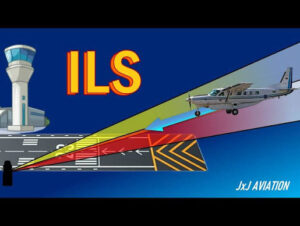
The report also contains a fundamental technical misconception. The procurement was for CAT III-capable ILS/DME ground equipment, not merely an ILS antenna. An ILS incorporates a localizer for lateral guidance and a glide path for vertical guidance; the localizer is therefore an integral component of the system and cannot properly be presented as an additional facility that NAMA omitted.
More importantly, installing CAT III-capable equipment does not automatically make an airport CAT III operational. Such operations require an integrated system comprising a calibrated and serviceable ILS, approved instrument approach procedures, appropriate approach, runway centreline and touchdown-zone lighting, runway visual-range reporting, dependable primary and standby power, protection of ILS critical and sensitive areas, activated low-visibility procedures and suitably equipped and certified aircraft, operators and flight crews.
At FAAN-managed airports, FAAN manages airfield ground lighting and airport power, while NAMA provides the relevant navigation and air traffic services infrastructure and NCAA regulates and approves operations. Meteorological services and aircraft and crew capabilities are also essential. CAT III, therefore, is a coordinated aviation-system responsibility; the absence of a complementary aerodrome facility cannot reasonably be presented as evidence that NAMA failed to provide the ILS.
The operational history of Lagos Runway 18R further exposes the weakness in the report’s narrative. Following installation of the CAT III system, pilots reported that the equipment could take aircraft off course during final approach and could also go off altogether. International airlines consequently resorted to Runway 18L. The lighting facilities required for CAT III operation were unavailable, and NIMET was also expected to provide the necessary meteorological input. NAMA subsequently engaged the relevant stakeholders and, after consultation and approval by the supervising Ministry, replaced the equipment with CAT II capability pending provision of the complementary facilities required for CAT III operations. It was thereafter calibrated and passed the requisite checks.
The problems with the CAT III system began right from installation and persisted until the International Air Transport Association (IATA) raised concerns about the equipment’s safety and its tendency to transmit misleading parameters to aircraft. The agency also received several operational reports from Air Traffic Controllers, the Safety Management System unit, international airlines and Air Traffic Engineers, all pointing to the need to address the problem because it was increasingly becoming a threat to safety. The truth of the matter is that we never had CAT III in Nigeria; it was merely a name, as the equipment was downgraded to CAT II to align with the categories of other complementary facilities such as runway lighting, aircraft compliance with CAT III, trained crew on CAT III, stable power, and so on. The Abuja facility is also not operating as CAT III but has been downgraded to CAT II for the reasons stated above. The product was replaced to protect the flying public because of the erratic malfunctions observed since its installation. The facility’s operational records before its removal are well documented.
The decision was not an admission that the procurement was worthless; rather, it reflected the reality that Nigeria did not, at the time, have the complete ecosystem required for CAT III operation, including compatible runway lighting, CAT III-compliant aircraft, appropriately trained flight crew and stable power.
Indeed, NAMA’s operational records show that the Lagos Runway 18R and Abuja Runway 22 facilities were subsequently commissioned, certified and promulgated for operation in February 2020 following necessary realignment, recalibration and validation. The assertion that the systems “never worked for one day” is therefore contradicted by the said commissioning and certification record.
NAMA does not deny that subsequent integrity and serviceability problems occurred. In Lagos, recurrent problems ultimately made continued reliance on the installation unacceptable. The Selex platform also raised legitimate fleet-commonality, training, spares, and lifecycle-support concerns because NAMA’s established maintenance environment was more familiar with Thales and Indra systems. A safety-critical navigational aid that cannot consistently demonstrate the required integrity must be downgraded, withdrawn or replaced. That is safety management, not waste.
The second phase of the programme has also been inaccurately reported. It covered Mallam Aminu Kano International Airport, Port Harcourt International Airport and Katsina Airport—not Maiduguri and Sokoto. Its initial approved sum was ₦1,824,643,438.33, while an augmentation of ₦546,109,336.33 brought the total approved project value to ₦2,370,752,774.66. Implementation was affected by funding constraints and legitimate concerns about reproducing the reliability, commissioning, spares and lifecycle-support difficulties encountered during the first phase.
NAMA is equally concerned by the report’s attribution, through anonymous sources, of allegations that the project was a conduit for “cornering” public funds. No audit finding, judicial decision, procurement investigation or competent determination was cited to establish such wrongdoing. An allegation from an anonymous source should not be elevated into an established fact.
The report’s treatment of the Total Radar Coverage of Nigeria (TRACON) is similarly misleading. The core architecture has been deployed for more than fifteen years, with critical hardware increasingly obsolete and replacement components and manufacturer support becoming difficult to obtain. Thales, the original equipment manufacturer, has proposed replacement rather than another limited modernisation. Nigeria now requires a resilient surveillance architecture that integrates primary and secondary radar with complementary technologies such as ADS-B and wide-area multilateration, while providing redundancy, national-security coordination, and capacity for future expansion.
Finally, the Aeronautical Information Services (AIS) automation project is an inherited obligation. The present NAMA Management neither awarded nor initiated it but has continued to discharge the inherited contractual obligation, with payment now close to full settlement. However, settling an inherited contract should not be confused with declaring that its original technical specification remains adequate for today’s operational requirements. International requirements in digital aeronautical information management, structured data exchange, cybersecurity, interoperability and system-wide information management have evolved substantially since the project commenced. AIS automation must also not be confused with VHF voice communication infrastructure. AIS concerns the collection, validation, management and distribution of aeronautical data and publications. Pilot-controller VHF communications constitute a separate communications service, although both depend on reliable power and telecommunications networks.
NAMA remains committed to transparency, accountability and responsible stewardship of public resources. But responsible journalism requires distinguishing estimates from contract sums, procurement from operational performance, and safety interventions from waste.
The agency will continue to prioritise the safety and efficiency of Nigerian airspace and will never compromise the protection of the flying public merely to preserve an investment whose operational integrity has become questionable. The decision to downgrade or replace safety-critical equipment when its integrity becomes doubtful is not an abandonment of responsibility; it is precisely what responsible airspace management demands.
Signed
Dr Abdullahi Musa
Director, Public Affairs and Consumer Protection
Google+
A specific regulatory body often faces delays when public funds are allocated. My concern is how the actual maintenance schedule impacts system longevity.