- FAAN MD: Financing talks for Lagos airport rail extension reach advanced stage
- Riding the Tidal Wave: How CITA Energies navigated 20 years of jet fuel volatility
- Delta unveils major upgrade to Delta One, redefines premium long-haul travel
- NSIB opens probe into Challenger 604 door separation incident
- Private jet forced into emergency landing in Abuja after door detaches



MMIA: Decaying aerodrome yearning for transformation

The age-long decay of the Murtala Muhammed International Airport, Lagos stares everyone in the face despite FAAN’s intervention to arrest the drift. The disclosure of a new world-class and smart aerodrome by Aviation Minister, Festus Keyamo has given way to rays of hope, writes, WOLE SHADARE
Hope lost

Despite palliative measures from the Federal Government to sustain the Murtala Muhammed International Airport, indications have shown that the terminal can no longer work effectively.
The airport terminal is what you use in judging any nation because the very first impression starts from there.
Neglect
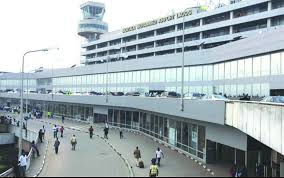
Successive governments did not see the need to save the country the shame of having a facility that had long outlived its usefulness. The current administration of President Bola Ahmed Tinubu could be the one to save the country the shame if it matches its words with action to pull down the over 46 years facility that not a few believe has and continues to cause the nation a huge embarrassment.
The terminal as it is requires declaring an emergency just like some few other sectors that equally require urgent attention.
Most of the facilities are obsolete and efforts by successive management of the Federal Airports Authority of Nigeria (FAAN) to fix decrepit facilities have not yielded fruits.
Unrelenting Kuku
The Minister of Aviation and Aerospace Development, Mr. Festus Keyamo is concerned, the Managing Director of FAAN, Mrs. Olubunmi Kuku and her team are expending energy to keep the facility running despite age-long neglect that has over stretched of existing facilities.
Despite Kuku’s spearheading key initiative focused on advanced security measures, cutting edge equipment deployment, manpower optimism and comprehensive strategies aimed at safeguarding airports against unlawful interference, these efforts have not truly shown because of the age-long decay of the terminal.
Her infrastructural initiative, including the reconstruction of the terminal, conveyor belts among other initiatives which have significantly enhanced security and improved well-being of passengers and other users would have been more visible if the country had a world-class terminal.
MMIA for demolition
Keyamo, at the launch of 100 Years of Aviation in Nigeria book authored by a journalist, Wole Shadare in Lagos at the weekend disclosed that the government intends to demolish the structure and replace it with a modern facility.
The Minister said the terminal building has outlived its usefulness and needs a modern and smart terminal structure that would cater for the travelling needs of Nigerians and other users.
Modelled after Schiphol
When Nigeria’s Murtala Muhammed International Airport (MMIA) was being fashioned in the pattern of the Schiphol Airport in Amsterdam, not a few Nigerian civil construction engineers applauded the foresight of the Military Government which saw to the speedy conclusion of the airport. It was then said to be the pride of not just the West African sub-region, but indeed, the entire Africa as a continent.
The international terminal modelled after Amsterdam Airport Schiphol was opened on March 15, 1979. Keyamo noted that while Schiphol had undergone massive transformation over the years, the Lagos airport terminal has become a shadow of its old self.
He stated that when the airport terminal was commissioned in 1979, even up to late 1990, it was processing just about 200,000 passengers in a year.
This, he said has changed, as the terminal now processes more than ten million passengers yearly, with an increase in the number of aircraft that fly into the country.
He further stated that the new structure would no longer be built with bricks and blocks but one that is modern and can accommodate projected passenger traffic for another 40 years.
Quick intervention
He stated that the new terminal building would be built in record time unlike what obtained in the past where terminal building construction took more than 15 years to complete, stressing that by the time of completion, the facility would have been overtaken by new invention.
A former Managing Director of the Federal Airports Authority of Nigeria (FAAN), Saleh Dunoma had in 2015 at a Senate hearing by the Ad Hoc Committee on Aviation disclosed that when FAAN invited German engineers to repair the airport’s generators, inaugurated since inception, they were shocked that Nigeria still uses such obsolete equipment discarded in other parts of the world.
Another former Managing Director of FAAN who succeeded Capt. Rabiu Yadudu few weeks before he was removed from office lamented the precarious nature of the MMIA, describing it as obsolete and one that had defied palliative, advising that the country needs to build a world-class international airport terminal.
The maintenance work of the terminal has been left for too long untouched. That probably explains why the facilities are now refusing to cooperate even with enormous job of Kuku and her team to at least put it in manageable situation at for the moment
Cue from other nations
The Murtala Muhammed International Airport terminal is truly an eyesore and one that negatively portrays the country as unserious despite enormous resources expended to give it a face-lift.
Countries that are smaller in size and resources are building world-class airport terminals. Airport operator and manager Ghana Airports Company Limited (GACL) broke ground on the construction of its flagship project (Terminal 3) at Kotoka International Airport (KIA) in March 2016.
The Blaise Diagne International Airport (AIBD) is a new international airport in Dakar, the capital city of Senegal. The airport was commissioned in December 2017.
The AIBD project is funded via loans from a number of banks such as the African Development Bank Group (AfDB), which approved a €70m ($82.14m) loan in December 2010.
The Islamic Development Bank provided $117.3m for the development, while the West African Development Bank offered $30m in funding. The airport has grown to be one of the strong aviation hubs in West Africa.
A new airport South of Kigali, Rwanda could accommodate eight million passengers a year, making it one of the busiest in Africa by the time the $2 billion airport is completed and whose developers want it to be the jewel in the crown of Africa’s aviation industry.
Then, what is the problem with Nigeria; a country very rich in natural resources but very poor in the execution of world-class airport terminals and facilities?
Worldwide, airports are redeveloped regularly to meet passengers’ demand and growth, so that the facilities are not overstretched.
Until now, not enough was done to improve its infrastructure, except for routine maintenance. There is no denying the fact that the airport has been criminally neglected for too long, and left to deteriorate at such an alarming rate, that it has continued to be more of a scare to its users.
Last line
However, in the face of growing technological improvement in the aviation industry globally, aviation experts said it has become expedient to upgrade the facilities to conform to trends in the 21st century.
Google+