- FAAN MD: Financing talks for Lagos airport rail extension reach advanced stage
- Riding the Tidal Wave: How CITA Energies navigated 20 years of jet fuel volatility
- Delta unveils major upgrade to Delta One, redefines premium long-haul travel
- NSIB opens probe into Challenger 604 door separation incident
- Private jet forced into emergency landing in Abuja after door detaches



Infrastructure strain: Stakeholders push to hike NAMA’s ticket revenue share
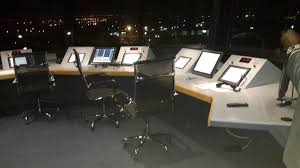
Aviation experts are warning that Nigeria’s airspace safety hinges on an urgent, radical overhaul of how the Nigerian Airspace Management Agency (NAMA) is funded.
The alarm comes amid intense industry debate over a proposal to aggressively hike NAMA’s share of the 5% Ticket Sales Charge and Cargo Sales Charge (TSC/CSC) from its current 23% to a staggering 60%.

Far from a petty turf war for institutional advantage, industry stakeholders argue that the proposal reflects the harsh fiscal realities confronting modern Air Navigation Service Providers (ANSPs) worldwide.

Aviation has evolved into one of the most capital-intensive, technology-driven industries on earth, yet Nigeria’s revenue-sharing framework remains frozen in a bygone era.
Aviation security consultant and former Commandant of the Murtala Muhammed Airport, Lagos, Grp. Capt. John Ojikutu (Rtd) underscores that NAMA cannot be budgeted for like a typical administrative civil service organ.
“Air navigation equipment is not installed once and forgotten,” Ojikutu pointed out. “Navigation systems age rapidly. Software platforms require regular upgrades, and surveillance systems must continuously evolve to meet emerging international standards. Communication infrastructure requires constant maintenance. Equipment failures are not mere operational inconveniences; they carry direct implications for safety, efficiency, and international confidence in Nigeria’s aviation system.”
However, rather than backing the drastic leap to 60%—which critics argue would effectively starve the other four safety and training agencies tethered to the TSC pool- Ojikutu is championing a more pragmatic, surgical adjustment to fix the distribution imbalance.
Currently, the 5% TSC/CSC pool is collected by the Nigerian Civil Aviation Authority (NCAA). Under a long-standing formula, the apex regulator retains the lion’s share, historically between 53% and 58%, leaving NAMA with a lean 23%.
Ojikutu has repeatedly petitioned the National Assembly to amend the Civil Aviation Act to cap the NCAA’s portion at 40%, redistributing the surplus to agencies managing heavy physical infrastructure.
His logic is clear: the NCAA is a regulatory body with significantly lower operational overhead compared to the immense capital required to keep the skies safe. NAMA bears the monumental financial burden of purchasing, calibrating, and continuously running critical Communication, Navigation, Surveillance, and Air Traffic Management (CNS/ATM) systems across all federal and state airports.
Keeping NAMA capped at 23%, he explained, creates a dangerous, systemic shortfall, leaving the agency struggling to maintain equipment within strict limits or handle routine calibration cycles without sinking into debt.
Instead of an unfeasible 60% single-agency capture, Ojikutu proposes a more realistic two-pronged solution: bump NAMA’s TSC allocation to 40%, and pair it with the 100% automated collection of over-flyer charges from international airlines.
An air traffic controller who spoke to Aviation Metric on the condition of anonymity echoed these structural concerns, noting that the financial realities confronting NAMA today bear zero resemblance to the landscape when the current revenue-sharing formula was drafted.
“Since then, aviation technology has advanced dramatically,” the controller explained. “Satellite-based navigation, digital communications, surveillance technologies, automation systems, cybersecurity requirements, and performance-based navigation (PBN) have entirely transformed global air traffic management.”
Nowhere is this strain more evident than in NAMA’s mandate to maintain vital CNS facilities across the vast federation.
These high-tech installations, including Instrument Landing Systems (ILS), Doppler Very High Frequency Omnidirectional Range (DVOR), Distance Measuring Equipment (DME), radar stations, and Automatic Dependent Surveillance-Broadcast (ADS-B) facilities, are scattered nationwide, often in remote locations lacking reliable public utilities or easy access.
Compounding the problem is Nigeria’s macroeconomic reality. “Infrastructure that previously cost millions now requires several multiples of the same amount,” the controller added.
“Spare parts, electronic components, and manufacturer support services are largely imported and priced in foreign currencies. Yet, NAMA’s statutory share of the TSC has remained virtually unchanged despite these realities.”
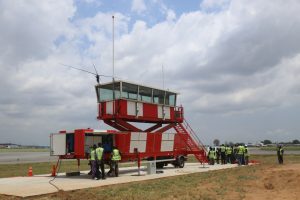
Given these compounding economic and technological pressures, stakeholders agree on one thing: whether the final number settles at 40% or 60%, an objective, urgent upward review of NAMA’s funding is no longer up for debate; it is an absolute necessity for safe skies.
Google+