- Babalakin lauds Tinubu over 19 years BASL, FG dispute resolution, pledges mass job creation
- Air Peace strengthens leadership pipeline with key flight operations appointments
- Transport Summit Holds Friday
- What Abuja private jet door blowout reveals about aviation safety
- Jet fuel price volatility threatens supply companies' viability, warns CITA Energies Chief



FAAN targets seamless travel at MMIA with Biometric gates, digital upgrades
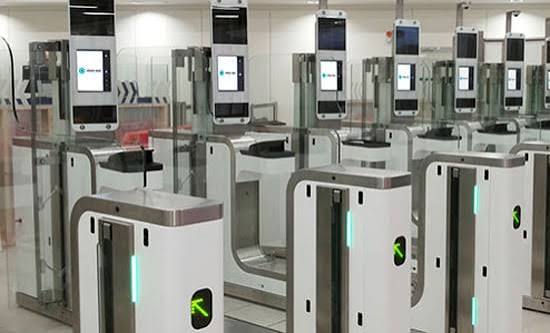
The Managing Director of the Federal Airports Authority of Nigeria (FAAN), Mrs Olubunmi Onabanjo-Kuku, has laid out a bold vision for a completely overhauled MMIA, one defined not just by reinforced structures and modern architecture, but by smart technology, biometric precision, and contactless operations.
Speaking on the sidelines of the just-concluded 35th Airport Council International (ACI-Africa) in Abuja, she said, “We are reimagining the future of MMIA.

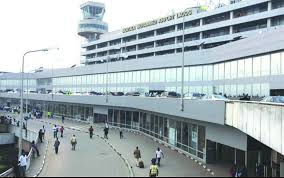
“This is far more than a physical renovation; we are elevating Nigeria’s primary aviation gateway to global standards by integrating smart passenger-processing systems across every touchpoint.”
The roadmap outlines a seamless journey for international travellers. Passengers will soon move through check-in and security checkpoints using facial recognition cameras, eliminating the need to repeatedly present physical tickets or boarding stubs.
The upgraded terminals feature automated electronic gates where travellers can scan their passport data pages, allowing the system to profile and verify them in real time within seconds.
Modern Rapiscan screening machines and smart lane systems for cabin baggage, she said, will streamline security checkpoints, reducing wait times while strengthening the national security architecture, while operations at access gates, car parks, and lounges are transitioning to 100% digital transactions to improve processing speeds, enhance accountability, and eliminate delays.
She also said the authority is using technology to improve runway safety, airfield lighting, and visual docking systems, stressing that these technologies will help reduce the potential for human and manual errors across airport operations.
Speaking on the leap in Lagos traffic that places Nigeria in 4th position in Africa, the FAAN MD stated that a key driver of this growth is Lagos’ Murtala Muhammed International Airport (MMIA), which is currently undergoing terminal rehabilitation and modernisation, noting that MMIA recorded a 24.1% increase in scheduled seat capacity in September, leading performance among Africa’s top ten busiest hubs.
“This is driven by currency reforms, new aircraft leasing agreements, and growing confidence from international carriers looking to fly to Nigeria,” Onabanjo-Kuku said, adding that several airlines have resumed operations in the country under the current Minister of Aviation and Aerospace Development.
“These figures are not abstract. They represent millions of Africans connecting with family, doing business, accessing healthcare, and exploring opportunities. They represent livelihoods, economic growth, and the future we are building together,” she said.
However, Onabanjo-Kuku stressed that market size alone does not resolve systemic operational hurdles. While Africa accounts for 18% of the world’s population, it generates just 1% of global air traffic.
Furthermore, passenger load factors remain below global averages, and airline financial stability remains vulnerable across the continent.
Despite these headwinds, recent figures show sustained momentum. Data from the International Air Transport Association (IATA) indicates African airlines posted a 6.4% year-on-year rise in international passenger demand in July 2026, contrasting with a 0.1% decline globally.
Overall passenger demand in Africa grew by 5.2%, trailing only Latin America and the Caribbean, and significantly outpacing the global benchmark of 0.2%.
“While global international demand actually declined… Africa was expanding. We are not just participating in global aviation recovery; we are leading it,” Onabanjo-Kuku noted.
In Nigeria, a market of over 220 million people, annual traffic across 28 airports stands at approximately 19.5 million passengers.
Onabanjo-Kuku observed that while this highlights substantial growth opportunities, a considerable gap remains between current capacity and market potential.
To address these deficits, FAAN has pursued operational reforms since 2023 focused on safety, efficiency, and infrastructure.
Key initiatives include major runway overhauls at MMIA, terminal upgrades, improved airfield lighting, and the rollout of the Passenger Experience Hub to streamline airport processing.
On human capital, FAAN has certified over 3,500 personnel through International Civil Aviation Organisation (ICAO) and ACI training programs, alongside structural changes to its Directorate of Cargo Development Services to bolster trade throughput.
Looking ahead, Onabanjo-Kuku urged a shift toward public-private collaboration, emphasising that government funding alone is insufficient to meet the industry’s infrastructure demands.

“We have rehabilitated a major runway at the Murtala Muhammed International Airport, upgraded terminals, and improved airfield lighting while maintaining operations. We have focused on the fundamentals: safe runways, functional terminals, and reliable systems. On passenger experience, we have established the Passenger Experience Hub, a dedicated initiative to make speed, predictability, comfort, and human assistance central to our operations.”
Google+