- SAHCO elevates inclusive aviation services with landmark AmbuLift acquisition
- 2027 Aviation Hall of Fame: NAMA boss Farouk Umar, pioneer MD, Ibrahim Auyo nominated for induction
- Musa, NAMA director bags doctoral fellowship award
- Ghost Schedules, Broken Dreams: The hidden toll of Nigeria’s flight delay crisis
- MMA2: Responding to Growing Passenger Traffic Through Capacity Expansion, Collaborative Solutions



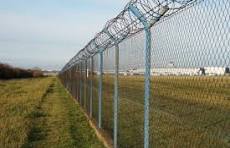
Beyond The Wire: The vulnerability of Nigerian airports’ perimeter fencing

The age-long commitment to securing Nigeria’s airport perimeters has become a saga of shifting deadlines, budget cycles, and evolving security threats. For decades, the Federal Government has identified perimeter fencing as a top priority. The government has now categorised such projects as a priority, writes WOLE SHADARE
The recent security incident at Akure Airport has indeed reignited the long-standing debate over the underbelly of Nigerian aviation: perimeter security.

The breach, which occurred around March 15, 2026, saw suspected criminals—described variously as bandits or kidnapping logistics suppliers gain access to the runway vicinity.
This event has exposed critical gaps in infrastructure and prompted a sharp response from both the Ministry of Aviation and industry stakeholders.
The incident began when farmers working behind the airport’s operational fence fled toward the runway, shouting for help after spotting armed men on motorcycles.
Air Traffic Controllers (ATC) spotted the unusual movement and raised the alarm. A joint team of Aviation Security (AVSEC), the Nigerian Air Force, and the Army eventually apprehended several suspects in the surrounding bush.
A notable inter-agency friction emerged afterwards. While FAAN reported the arrest of four bandits within the airport vicinity, the Ondo State Police Command countered this, stating the suspects were kidnapping logistics suppliers arrested kilometres away, and denied that a breach occurred inside the facility.
Nigeria has over 2,500 km of airport boundaries to secure across diverse territories. Communities often claim airport land as ancestral, leading to legal standoffs when fences are erected. FAAN Legal Dept is currently resolving over 40 land disputes.
Minister of Aviation and Aerospace Development, Festus Keyamo, clarified that while the airport was likely not a targeted victim, the incident was a spillover from an external security situation.
He admitted to the facility’s vulnerability. Keyamo specifically identified a broken or weak segment at the rear of Akure Airport as the entry point.
The Minister noted that rebuilding such infrastructure across the country requires significant money and time, which the ministry is currently trying to raise.
Aviation experts pointed out that a perimeter fence is only half the battle; without CCTV and modern surveillance systems, these boundaries remain easy to exploit.
As noted by industry professionals such as Mohammed Badamasi, the absence of a standard fence increases an airport’s insurance risk profile. This cost is eventually passed on to Nigerian airlines in the form of higher hull insurance premiums.
The incident underscores a systemic issue that has been frequently highlighted over the years, putting many of the country’s aerodromes under the spotlight. Many Nigerian airports still struggle to meet ICAO Annex 14 (perimeter fence) and Annex 17 (security fence) standards.
Porous perimeters often lead to higher insurance premiums for airports and airlines, ultimately affecting the industry’s bottom line.
Not a few believe that the presence of farmers and locals operating so close to or within airport boundaries creates a permanent security risk that is difficult to manage without a closed-loop infrastructure.
Out of 26 airports managed by FAAN, a comprehensive, ICAO-standard perimeter fence are very few.
Recent reports from FAAN’s Aviation Security (AVSEC) indicate that at major hubs such as Lagos (MMIA), between 20 and 30 individuals are caught daily attempting to breach airport boundaries.
For those that have perimeter fences, neighboring communities have been found destroying fences for farming or shortcuts.
The activities of these persons around or within airports have largely contributed to challenges in meeting Annex 14 (Aerodrome Design) and Annex 17 (Security) standards, putting Nigeria at risk during universal security audits.
There is a distinction between Annex 14 (standard perimeter fence to keep out animals/casual intruders) and Annex 17 (security fencing designed to thwart unlawful interference).
Most Nigerian airports currently only have partial Annex 14 fencing, leaving them vulnerable to coordinated threats.
In areas such as the Ajao Estate axis near Lagos (MMIA), FAAN has had to resort to demolition to reclaim the perimeter. Residential buildings erected directly against or over aviation fuel pipelines and perimeter walls create blind spots for security patrols.
FAAN has categorised Akure and other regional airports as priorities under its latest rehabilitation plan, aiming to achieve total perimeter fortification by 2027.
Historically, ministers preferred commissioning new terminals (which are visible and voter-friendly) over perimeter fences, which are expensive, largely invisible to the flying public, and prone to theft or vandalism.
At airports in Enugu and Port Harcourt, sections of fencing were built in the past but collapsed due to poor drainage or were stolen by metal scavengers. The government is now moving toward smart fences—integrated with sensors—to make them harder to breach without an immediate AVSEC response.
The March 2026 breach at Akure airport has forced the government to admit that partial fencing is no fencing at all. Minister Keyamo recently noted that a fence is only as strong as its most porous point.
The Ministry of Aviation has set December 2027 as the target for “Zero Porosity” across all international gateways.
There is a growing discussion about allowing private airport managers under the concession programme to assume responsibility for perimeter security costs as part of their operational mandate.
Under the Renewed Hope Infrastructure Development Fund, the government has committed to a massive overhaul. A 14.6 km perimeter fence project valued at nearly N50 billion is said to be underway. This is designed to be a smart fence featuring patrol roads and electronic surveillance.
Under previous administrations, the Aviation Sector Roadmap specifically listed perimeter and total radar coverage as twin priorities. However, contract-abandonment cases and mobilisation-fee scandals slowed progress at regional airports.
The current administration has shifted from merely planning to a Nigeria First procurement strategy, attempting to use the Renewed Hope Infrastructure Development Fund to close the 2000km+ fencing gap across 26 airports.
While the Ministry of Aviation has accelerated funding for these projects, the pace of implementation must match the escalating security threats in the hinterlands. Until the perimeter is secured, the first layer of defence remains a gaping hole in Nigeria’s aerospace development.
Google+