- UK lawmakers urge pause on $64 billion Heathrow third runway over climate, cost concerns
- Nigeria hits 91.30% ICAO score, closes safety concern, Minister lauds Farouk NAMA MD
- Clark says Emirates filling aircraft despite profit decline over soaring fuel prices
- Mutfwang, United Nigeria Airlines target agro-cargo, tourism revival as carrier launches Jos operations
- vPASS: Biometric lock on fragile door



UK lawmakers urge pause on $64 billion Heathrow third runway over climate, cost concerns
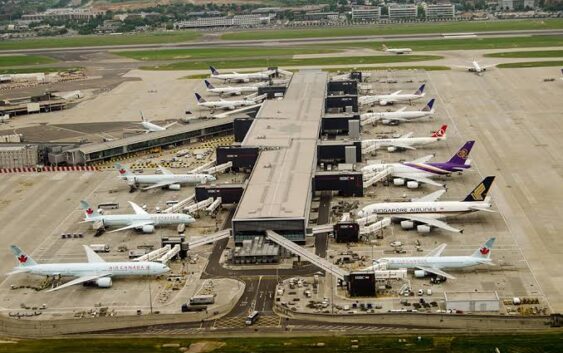
- BA: UK’s Heathrow expansion may fail over $25b funding gap
The United Kingdom government is facing fresh pressure to halt its controversial plans for a third runway at London Heathrow Airport after a damning parliamentary report questioned the project’s economic viability, environmental impact, and infrastructure readiness.

In a report published on November 27 regarding the Heathrow Expansion National Policy Statement (HENPS), the House of Commons Transport Committee concluded that ministers have failed to justify the multi-billion-pound expansion as critical to Britain’s national economic growth.
The lawmakers urged the government to suspend the current timeline and deliver a far more rigorous cost-benefit analysis before taking any further steps.
They also faulted the administration for rushing out a draft policy statement without first establishing a comprehensive, overarching national aviation strategy.
“Expansion should not go ahead at any price, or at any cost to society or the environment,” the committee warned in its findings.
At the heart of the committee’s critique is the diminishing economic return projected for the new runway.
Citing the Department for Transport’s own modelling, the report noted a sharp downward revision in expected Gross Domestic Product (GDP) benefits compared to earlier forecasts, characterising the anticipated additional growth as “relatively modest.”
Beyond macroeconomic doubts, the lawmakers flagged major uncertainties around the expansion’s final price tag.
The committee demanded greater transparency on how capital expenditure overruns would be financed, warning that unclear financial frameworks could ultimately translate into steep airport charges for airlines and higher ticket prices for passengers.
Environmental compliance remains another major stumbling block. The report referenced recent warnings from the Climate Change Committee (CCC), which determined that expanding Heathrow is incompatible with the UK’s legally binding carbon budgets and net-zero emissions targets under existing policies.
According to the MPs, this directly undermines the government’s own climate criteria, one of four key benchmarks established under the HENPS alongside economic growth, air quality, and noise pollution.
The committee insisted that both air quality and noise mitigation tests must be significantly strengthened before any construction is approved.
Furthermore, the lawmakers criticised the absence of concrete plans to upgrade surface transport links to the hub, specifically pointing to delays and gaps in proposed rail connections from the west and south of England.
Transport Committee Chair Ruth Cadbury said the government had simply not proved its case, noting that the committee’s conclusions were drawn from over 90 written submissions and extensive hearings with aviation industry leaders, local authorities, academics, and community groups.
Cadbury called on ministers to hit the pause button, present Parliament with stronger economic data, and outline clear contingency measures if aviation decarbonisation targets are missed.
“If a third runway is to get off the ground, then government also needs to strengthen the air quality test and noise tests, develop plans for improving public transport and bottom out how much it will cost airlines and passengers to use an expanded Heathrow,” Cadbury said.
Meanwhile, International Airlines Group (IAG), which owns British Airways, Iberia, Aer Lingus and Vueling, says Heathrow’s proposed £49 billion ($65 billion) expansion is too expensive and could force airlines to pass substantial additional charges on to passengers.
The airline group believes the project should cost no more than £30 billion ($40 billion), leaving a £19 billion difference between Heathrow’s estimated expenditure and what IAG considers commercially affordable.
According to The Times, IAG chief executive Luis Gallego raised the concerns in a letter to British Prime Minister Andy Burnham, warning that the current expansion proposal could become financially unviable without significant changes to its funding arrangements.
The disagreement centres on Heathrow’s proposed third runway, which would increase capacity at one of the world’s busiest international airports and strengthen London’s position as a global aviation hub.
IAG supports expanding the airport but argues that the existing financing structure could require airlines to absorb higher airport charges, potentially making air travel more expensive.
Gallego warned that private investment alone would not be sufficient to finance the proposed expansion at an acceptable cost.
The airline group has suggested that the British government could use additional revenue from air passenger duty generated by the expansion to support construction.
It also proposed direct government investment in land purchases and preliminary engineering works to reduce the financial burden on airlines and passengers.
Heathrow, however, maintains that the expansion remains achievable and says it is working with airlines to reduce unnecessary costs.
A Heathrow spokesperson said the airport had made progress in narrowing the funding disagreement and was reviewing the proposal with airline operators.
The airport also emphasised that the project must remain affordable for passengers and airlines while attracting sufficient investment to proceed.
Google+