- Tour operators unlock Nigeria's potential with new tourism passport
- WTM: Nigeria displayed unified front as tourism leaders push for private-sector collaboration, investors’ reforms
- Unions demand release of NSA probe report on Air Peace runway blockage
- The macroeconomic quagmire of Nigerian airlines
- Nigeria narrows BASA deficit as Omni-Blu/Enugu Air get four weekly London frequencies, starts operations Dec 1



Tour operators unlock Nigeria’s potential with new tourism passport
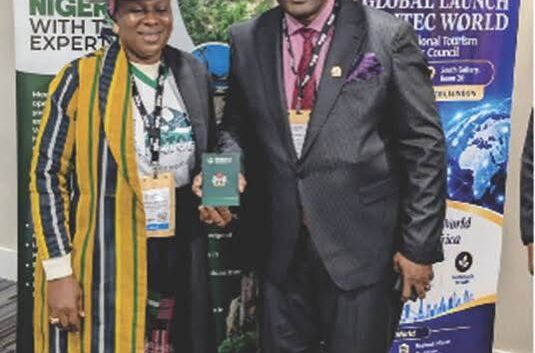
- Industry leaders laud NATOP, urge strong execution
In a bold push to reposition Nigeria on the global tourism map, the Nigerian Association of Tour Operators (NATOP) has officially launched the Nigeria Tourism Passport, a dedicated destination marketing initiative designed to showcase the nation’s rich attractions to international travel markets and potential investors.
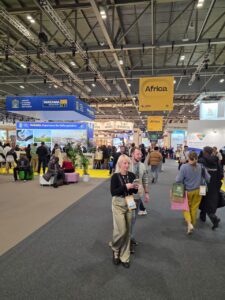
The unveiling took place during the 3rd Global Launch of AITEC World at the recently concluded World Travel Market (WTM) in London.

The Nigeria Tourism Passport is not a conventional travel document, nor does it replace the statutory requirements for international travel.
Rather, it is a tourism handbook and destination marketing resource designed to introduce the world to Nigeria’s rich cultural, historical and natural attractions.
Leading the presentation, NATOP President Mrs Bolaji Mustapha clarified that the document is not a conventional passport nor a replacement for statutory travel visas. Instead, it serves as an authoritative handbook and strategic marketing toolkit introducing Nigeria’s cultural, historical, and natural assets to the world.
Designed in Nigeria’s vibrant national colours, the handbook offers a curated guide to the country’s prime destinations. Featured sites include the Obudu Mountain Resort, Ibeno Beach, Yankari Game Reserve, and the UNESCO-listed Osun-Osogbo Sacred Grove.
The publication also highlights Nigeria’s rich cultural calendar—such as the Argungu Fishing Festival, Calabar Carnival, Osun-Osogbo Festival, Eyo Festival, and the traditional Durbar—alongside heritage milestones including the Benin Kingdom, Oron Museum, Nok Terracotta, and the Sukur Cultural Landscape.
Mustapha emphasised that NATOP’s goal is to bridge the long-standing gap between Nigeria’s vast potential and its actual conversion into international visitor traffic.
The Nigeria Tourism Passport represents NATOP’s effort to address part of that challenge by giving the country’s tourism offerings a more coordinated marketing identity.
It also places destination storytelling in the hands of industry practitioners who understand the products, experiences and services that make up Nigeria’s tourism market.
“This is a strategic initiative aimed at promoting Nigeria’s tourism destinations, enhancing accessibility, and creating new opportunities for tourism growth and collaboration,” Mustapha stated. “Nigeria is ready for the world, and the world is welcome to explore Nigeria.”
She said Nigeria’s tourism potential has long been a subject of discussion, with stakeholders frequently highlighting the gap between the country’s vast attractions and its ability to convert them into sustained international visitor traffic.
She added that WTM London provided an ideal global platform to directly engage international tour operators, airlines, hospitality brands, and investors who can connect Nigeria to key international markets.
Under Mustapha’s leadership, NATOP aims to expand the role of industry associations from traditional advocacy to direct destination promotion and product development.
The Nigeria tourism passport is tailored to deliver practical value across several key sectors, serving as serves as a foundational guide for creating and marketing Nigerian itinerary packages, outlining opportunities across hospitality, recreation, transportation, and destination infrastructure, and providing a structured entry point for overseas Nigerians seeking to reconnect with their heritage and explore new regions.
The initiative has drawn praise and strategic commentary from key aviation and tourism leaders.
Ola Awakan, Director-General of the Nigeria Tourism Development Authority (NTDA) commended NATOP’s initiative while emphasizing that sustainable tourism growth requires close synergy between private-sector operators and regulatory authorities.
He noted that marketing success must be backed by seamless visitor experiences, improved security, competitive infrastructure, and easy access.
His observation highlights an important consideration: destination marketing requires a coordinated approach involving government agencies, private-sector operators, tourism associations and other industry stakeholders.
Awakan said the success of Nigeria’s tourism promotion efforts will depend not only on how attractively the country presents its destinations but also on the quality of the visitor experience, ease of access, security, infrastructure, and the availability of competitive tourism products.
Tourism expert Frank Meke praised the initiative as a major step forward, but stressed that its ultimate success hinges on execution and distribution beyond trade shows.
“It must move from the exhibition stand into the hands of tour operators, travel agents, investors, and travellers,” Meke remarked. “It must translate into destination visits, tourism packages, business partnerships, and increased visitor traffic.”
“It must translate into destination visits, tourism packages, business partnerships and increased visitor traffic.”

He commended Nigeria for taking a step towards presenting its tourism offerings to the world in a more coordinated way, adding that the next chapter would be determined by how effectively the country turns that presentation into partnerships, investments and experiences.
Google+