- Geer: Competition doesn't worry us with £17 billion investment in new aircraft, B787 retrofitting
- United Nigeria Airlines backs expansion drive with landmark ₦22bn capital raise
- CIBN confers prestigious Honorary Fellowship on FAAN MD, Onabanjo-Kuku
- Delta partners BRECAN for breast cancer awareness, early detection in Nigeria
- Babalakin inspects MMA2 facility ahead of regional operations kickoff



Geer: Competition doesn’t worry us with £17 billion investment in new aircraft, B787 retrofitting
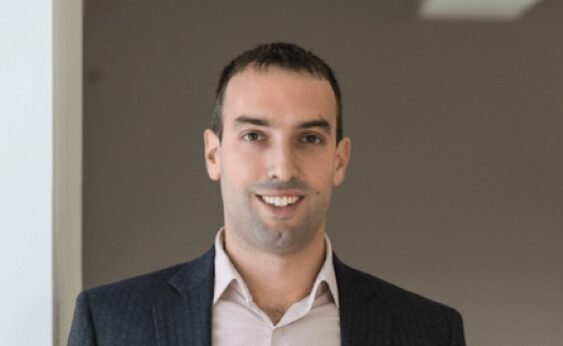
Since launching flights to Nigeria, the British carrier has navigated fierce competition, industry disruptions, and evolving market demands while building deep trade partnerships and a loyal customer base across West Africa. In this interview with WOLE SHADARE, the Chief Commercial Officer, Dave Geer speaks on Sir Richard Branson’s enduring affinity for the Nigerian market, and how next-generation aircraft and premium product upgrades are keeping the airline ahead

Twenty-five years of operations in Nigeria is no mean feat; how has Virgin Atlantic weathered the storm on the lucrative London-Lagos route over two decades?

Twenty-five years is a huge milestone. Few places around the world have we flown to for 25 years. Sir Richard Branson, our founder, has a real affinity for Africa. He absolutely loves it, and I know he’s been to Nigeria and seen pictures there that show the warmth and love Virgin and Virgin Atlantic have for Nigeria. I think we’ve built a really strong partnership here in Nigeria, which has strengthened the route and helped us continue through those 25 years, through all the ups and downs. Aviation is one of those industries, as you know, that has good times and has bad times. Even in the bad times, we have got through it. Things like COVID- as soon as we could, we were back here flying to Lagos again. I think Virgin Atlantic has been a true stalwart for 25 years now. It’s incredible.
Aside from Nigeria, which other West African countries do you operate to?
Nothing else in West Africa. We fly to Cape Town and Johannesburg in South Africa. I think the market between Nigeria and the United Kingdom is strong. There’s a history between the two countries. Many people have family in one country and family in another, and there are also strong business ties. I think those business ties have just got stronger and stronger over time. I think the market will continue to grow and strengthen. Another trend is more people wanting to feel comfortable when they travel, and to travel in our upper-class and premium cabins. Demand for that product is getting stronger and stronger.
Virgin Atlantic seems quiet in this market while pulling strong numbers on the route. Why is this so?
I think I’d say two things to that. First, operating for around 25 years counts for something. The Virgin brand is strong, and I think a lot of people know Virgin and Virgin Atlantic, so maybe we don’t need to shout as loud because of that. But from a strategy point of view, no matter where we are in the world, part of our core strategy is partnering with local trade, agents, and tour management companies in the market. They’re the ones who can help shout about Virgin Atlantic. As you know, we’re holding this event tonight to recognise that partnership because actually they do a lot of the shouting for us.
How is your airline coping with stiff competition on this very lucrative route? We have three airlines, British Airways, Virgin Atlantic and Air Peace on this route

We always love competition. This is where Virgin Atlantic started with Richard Branson. It was to bring competition to British Airways. For the last 40-plus years, we’ve done that and made sure we thrive on competition. We stay relevant by investing in our products. We’re investing £17 billion over this five-year period in new aircraft, retrofitting our 787s, and putting Starlink on all our aircraft so customers flying with us are on next-generation aircraft, while also investing in things like our clubhouse at Heathrow. Our customers get the best experience. Right now, we’re flying our newest product in this market. A 330-900neo, which we’re still getting; we received another one last week, so this is a brand-new product we’re putting on the market with the latest seats. They have a seat we call the retreat suite, with even more space at the front of the aircraft and an even bigger screen. It’s a fantastic product, and we’ve got 10 more of those aircraft coming, so this market will get to experience it. And potentially, over time, some of these new aircraft will have larger upper-class cabins, going from 32 to 44 or even 48 upper-class seats, and larger premium or premium economy cabins up to 56 seats. A lot of new products, including new types of premium seating, are coming into this market.
How competitive is your fare?
On pricing, we always try to stay competitive. I think we offer a fantastic product, maybe better than some of our competitors, so we price accordingly. But I think our customers are willing to pay that. Our planes fill up when they take off. What makes Virgin Atlantic truly different, which is our people. When you hop on one of our aircraft, the way that our cabin crew treat you as an individual and not just another passenger in seat 5G or 41A or wherever you might be sitting, but they actually get to know you and get to understand what you actually want from the flight and how you want to be treated. Do you want to rest? Are you looking for a meal at a certain time? All those things. I think that’s what makes Virgin Atlantic different. And it’s not just our cabin crew. It’s everyone at the airport, in our clubhouses, and across the airline. We’ve got something on this route called The Loft. It’s not the bar; it’s a seating area where the bar used to be. I think about five or six people can sit there, have a drink, and socialise.
Virgin Atlantic used to have an onboard bar. Are you bringing back the onboard bar?
It’s The Loft for now, unfortunately for you, but it’s still great. It’s still a place that you can socialise. Our people get to know our customers, especially our loyal customers, whom they might see time and time again. Many of our cabin crew love flying to Nigeria and prefer it, and they get to know those customers who travel there, what they like, and so on. I think that’s why people love to travel by bus and fly. You get points and status, and you can become gold members and things like that. But I think the real reason people travel with us is that they love the people that serve them.
How strong is your airline in terms of sales?
It’s been very, very strong, and our sales in Nigeria have grown far more than in the UK, even in the last 12 months, which I think is a fantastic sign of a great partnership with our trade agents. But they do too, because they’ve been selling Virgin Atlantic extremely well, and hopefully we can celebrate that with them this evening. That’s been a big part of growing this point of sale in Nigeria: we don’t have those restrictions or clunky workarounds agents had to use previously. They can just sell what they need to. Well, we would at the moment. There’s the air services agreement that limits.
Do you intend to increase your frequencies on the route?
The bilateral agreement currently allows three services on UK airlines daily and three services on Nigerian airlines. As you’ve seen, that bilateral agreement has opened up competition, and we always welcome it. So right now, the UK side is fully maxed out. That means neither we, BA, nor any other UK airline can add services to Port Harcourt, Lagos, or Abuja; that’s not possible. But the Nigerian side still has space available. Again, we welcome competition. For us, Lagos is the heart of our story. If things change, we will see where we stand. I think that’s largely it, and not many routes we fly have balanced sales from both sides. That works really well and is quite unique to Lagos and Nigeria. And it’s because of that strong connection. We also offer all transfers at Heathrow to North America, and our North American network is quite vast, which I think is an attractive proposition for this market as well. I think we’d love to grow, but let’s see what happens with demand, conditions, and regulations and things like that. For now, I think we should focus on what we do and do it as well as we can. But yeah, I’d love us to grow. I think we’ll keep doing what we’ve been doing, working with our partners here, and 25 years of relationship counts for a lot. I don’t think we’ll be embarrassed about putting great products into this market, as we have done. As I said, competition doesn’t worry us because we think we have the product and the people to compete with anyway.
You launched your A350 on the Lagos route. What aircraft type do you operate on the Lagos route?
Just to add to that, I think since COVID, we’ve always had our newest aircraft on the route. So when we were just coming out of COVID, we had our A350S, and now we have our A350NEOs. We don’t take the market for granted. We always try to make sure we have the newest product. And as you say, Nigerian consumers are very savvy, and they know exactly the seat pitch and what aircraft they’re on. So we always want to make sure we have our best product. We’re obviously in the process of getting new aircraft, so that we’ll be fully next-gen by 2028. Our average fleet age is about seven and a half years, which isn’t the same as our competitors.
How strong are your alliances with some African airlines like Kenya Airways and others?

We are still a SkyTeam member. So we are one of many members of SkyTeam. As you point out, you also have Kenya Airways in Africa. I think the real benefit for many of our customers, as we’ve been talking about, is that when they earn miles on a Virgin flight, they can use them on a flight from London to Nairobi, for example. So the SkyTeam partnership opens up the world for them. We’ve definitely seen our customers value that partnership and the ability to use miles not just on Virgin, Delta, and Air France-KLM, but also on China Eastern and all sorts of airlines, whichever they choose. First and foremost, thank you. We don’t take for granted the trust our customers and travellers put in us, because one of the most important things they do all year is visit family and friends. So that trust is hugely important. The fact that they’ve done it for over 25 years matters a lot to us. We don’t take it for granted. That’s why we keep bringing new aircraft to market and try to give them a great experience.
Google+