- Nation playing aviation underinvestment catch-up, says Kuku
- Air Peace Transitions From Occasional Charters To Monthly Non-Stop Flights To The Caribbean
- Non aeronautical source, FAAN’s structural shift to enhance revenue drive
- ASRT wants conducive business environment, low tax, charges for sector growth
- United to Add 250+ Planes in Next Two Years – Most by Any Airline


Non aeronautical source, FAAN’s structural shift to enhance revenue drive
The Chief Executive of Belujane Konsult, Mr Chris Azu Aligbe, has stated that the Federal Airports Authority of Nigeria (FAAN) transition from aeronautical revenue (fees from landing, parking, and passenger processing) to non-aeronautical revenue (commercial activities) is one of the most significant structural shifts in the agency’s history.
He stated this with respect to the concession of many assets, including the toll gates at the Murtala Muhammed International Airport, Lagos, and the Nnamdi Azikiwe International Airport, Abuja, which the authority said would be concessioned.

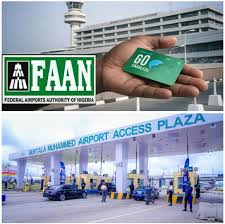
The planned concession and automation of airport toll gates by the FAAN reached a critical implementation phase as of March 2026. This initiative is part of a broader federal mandate to eliminate cash handling, block revenue leakages, and modernise airport infrastructure.
Minister of Aviation and Aerospace Development, Festus Keyamo, confirmed that the hybrid phase was temporary, adding that a subcommittee is currently reviewing proposals from private concessionaires to deploy fully automated infrastructure that eliminates human intervention.
Speaking to Aviation Metric in his Lagos office, Aligbe said that much of the revenue is still aeronautical, but admitted that non-aeronautical revenue is growing.
He said, “Services in the airport are the source of non-aeronautical revenue. That’s why the airport manager, when I say airport manager, the Managing Director, the management, is the person to put in place to drive the revenue that will come from the services, the non-aeronautical side.”
“The minister can call the MD and say this thing, can you look at this, you should look at this way, but not to announce that there is a concession. It is outside his purview. It should be considered outside the ministry’s purview. It is a primary responsibility of the airport manager. You can direct behind or whatever, you cannot pronounce that. The airport manager knows what is best for them, he added.
In managing the toll gates efficiently, Aligbe urged FAAN to engage companies that can provide proper E-entry and E-exit.
He further advised that whichever company wins the bid for the airport toll gates should be required to eliminate cash collections, with the proceeds going straight to government coffers.
While noting that FAAN gates are already in place, he said what is needed is the engagement of technical people.
The transparency issue ceases. You are talking about transparency when somebody is collecting cash, and you don’t know how much he has pocketed. Accountability is no longer an issue because it goes straight into their account. They have financed your account. Accountants are going to check what came in from the tool gate and say this is what is coming in.”
On policy inconsistency, especially regarding toll-gate concessions that were cancelled some years ago, Aligbe lamented that the situation pervades every facet of the country’s agencies.
“Take government away from the area where they are not supposed to operate. Leave the organisation in charge of handling services. Every minister wants to act on any concession he has seen. He looks up at the loophole, he begins to discuss it, and then suddenly, you know he’s there. All the challenges we face at the concession in our country stem from the actions of political officers. FAAN should be allowed to handle their things. Those political officers are ministers; maybe government, maybe from the presidency, somebody from the presidency is eyeing that place, and found a place to do it.”

“So leave those who know about it, let them do it. If there’s a problem, they will bear the problem, and the minister can now sanction those who enter into the agreement that caused it. But if the minister himself goes into it to draw this concern, if there’s a problem, he has gone,” he added.
Google+