- SAA wins top African airline award at travel market
- Airlines debt crisis triggers safety concerns, Bernard urges NCAA financial audit
- Insurance protection gap threatens Nigeria’s economic resilience
- Air Peace, NCAA lock horns over performance metrics
- Berthe: African Airlines struggle with minimal profit margins amid rapid passenger growth



Nigeria’s Agricultural Export Ambition Takes Flight: A Critical Look at the New Air Cargo Drive
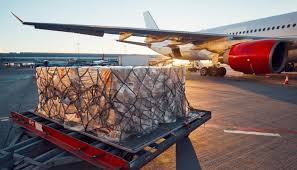
In the modern global economy, the velocity of trade is often as important as its volume. For a nation like Nigeria, blessed with vast agricultural resources, the perennial challenge has been bridging the logistical chasm between the farm and the foreign consumer. After years of infrastructural neglect and policy inertia, there are finally tangible signs that the government is treating this gap as an economic emergency rather than an afterthought.


The Aviation sector, traditionally viewed through the lens of passenger travel, is now being repositioned as a critical engine for trade diversification. A pivotal development is underway with the recent establishment of a dedicated Cargo Development Directorate within the Federal Airports Authority of Nigeria (FAAN). Created in December 2024 by the Minister of Aviation and Aerospace Development, Mr Festus Keyamo, SAN, the Directorate is a direct operational expression of the President’s broader economic agenda. While still in its infancy, this move signals a potential turning point for Nigeria’s struggling non-oil export sector.
The Context: A Sector Poised for a Breakthrough
Sub-Saharan Africa’s paradox is well-documented: it holds the majority of the world’s uncultivated arable land yet remains a net importer of food. For Nigeria, breaking free from this cycle requires a fundamental rethink of agriculture—not as a rural development program, but as a high-stakes, export-oriented industry. Success in this arena depends on speed. Perishable goods like chilli peppers, okra, mangoes, and leafy vegetables require seamless cold chains and rapid transit to command premium prices in European and Middle Eastern markets.
Historically, Nigeria’s air cargo ecosystem has been fragmented, hampered by decaying infrastructure, bureaucratic bottlenecks, and a focus on passenger handling that left freight as an afterthought. The creation of the FAAN Cargo Directorate appears to be a direct response to these systemic failures, tasked with transforming cargo from a secondary service into a primary revenue stream and economic catalyst. The Directorate is operationally led by Mr Lekan Thomas, who is at the helm as the Director of Cargo Development & Services, whom I met at several stakeholder engagements.

Deconstructing the Strategy:
From an external perspective, the leadership team’s strategy appears to be structured around logical, ambitious goals designed to overhaul the status quo. The MD/CE of FAAN, Mrs Olubunmi Kuku, is also a key driver of this strategy, as evidenced by past on-air discussions on air cargo.
- Addressing the Infrastructure Deficit
The most visible change has been the plan for international cargo and the unbundling of passenger and cargo operations. The activation of a dedicated Domestic Cargo Facility at the General Aviation Terminal in Lagos, with a similar project slated for Abuja, is a long-overdue development. By separating freight from the chaos of passenger logistics, these facilities aim to facilitate specialised handling, enforce phytosanitary standards, and drastically reduce the turnaround times that often lead to spoilage. For exporters who have lost countless consignments to delays, this specialisation is a welcome step. - Building a Cohesive Value Chain
Industry insiders have long lamented that air cargo fails not in the sky, but on the ground—at farm gates, customs barriers, and loading bays. The Directorate’s approach of engaging a wide spectrum of stakeholders noticed from the DCDS Operational Stakeholders Engagement held on 26th November, 2025, at Providence Hotel, Ikeja GRA, Lagos—from the Nigeria Customs Service and rural cooperatives to freight forwarders, ground handling companies, government agencies and finance houses—suggests a growing awareness that policy cannot be made in a vacuum. This collaborative model, championed by the new cargo team, if sustained, could dismantle the silos that have historically paralysed the sector. - Cultivating a Cargo-Led Economy
Beyond infrastructure, critical to create an “enabling environment.” This involves streamlining regulations and, more importantly, stimulating the market itself. From insider sources, there is a push to encourage private investment in cold storage and to align airport planning with agricultural production zones. The underlying goal is a fundamental narrative shift: viewing airports not just as transit hubs for people, but as specialised cargo terminals that function as launchpads for international trade. - Ensuring Financial Sustainability
Finally, there is a strong emphasis on revenue optimisation, given recent media reports of an 18-year revenue freeze. This goes beyond simply increasing fees; it is about widening the revenue base by increasing volume and formalising the sector. By reducing leakages and bringing informal trade channels into the formal economy, FAAN aims to ensure that cargo operations make a robust financial contribution, justifying further investment in the ecosystem.

Implications for the Broader Economy
These developments align with the federal government’s broader ambition to build a trillion-dollar economy. For the aviation sector, this means evolving from a landlord managing real estate to a logistics partner enabling trade. The leadership of Mrs Kuku and the operational focus of Mr Thomas are critical to translating this vision into reality on the ground.
If the Cargo Directorate fulfils its mandate, the implications for Nigerian agriculture will be profound. It promises a future where a farmer in Oyo State can reliably connect to a wholesaler in London, not despite the system, but because of it.
The Road Ahead: Cautious Optimism
While the architecture being put in place is promising, the history of Nigerian infrastructure is littered with well-intentioned policies that faltered during implementation. The success of the FAAN Cargo Directorate will ultimately be judged not by its strategic pillars, but by its execution: Can it maintain the cold chains? Can it keep the corridors free of rent-seekers? Can it ensure that the benefits reach the rural farmers who need them most?

For now, the direction is encouraging. By prioritising dedicated facilities, stakeholder cohesion, and regulatory discipline under a focused leadership team, Nigeria is finally laying the groundwork for an agro-export economy that could compete on the world stage. The farms are ready; the question is whether the logistics are finally ready to meet them
Google+