- Aisuebeogun at summit: Why Nigeria needs resilient transport system to survive external shocks
- Babalakin lauds Tinubu over 19 years BASL, FG dispute resolution, pledges mass job creation
- Air Peace strengthens leadership pipeline with key flight operations appointments
- Transport Summit Holds Friday
- What Abuja private jet door blowout reveals about aviation safety



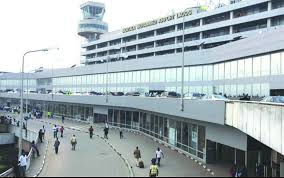
Amusan: Nigeria needs urgent investment in ageing airport facilities

A former National President of the National Association of Nigerian Travel Agents (NANTA), Dr. Soji Amusan, has expressed concern about the condition of many airports across the country.
He stated that many of Nigeria’s airports are ageing, congested or lack the modern facilities needed to accommodate growing passenger volumes and next-generation aircraft, stressing that investment in air traffic management, runway upgrades, passenger terminals and cargo facilities is urgently needed.

He noted that in a country now estimated at over 230 million, a burgeoning middle class, and an increasingly mobile workforce, the demand for affordable, reliable, and safe air transport, both domestically and internationally, remains increasingly urgent.
He further stated that for Africa’s most populous nation, it is about time that accessible aviation no longer remains a luxury or symbol of elite privilege; rather, it ought to reflect that it is increasingly becoming an economic necessity and developmental imperative.
In a paper presented at the 29th League of Airport and Aviation Correspondents (LAAC) annual seminar held in Lagos at the weekend, he lamented that despite Nigeria’s natural advantages, particularly its geographical location, large domestic market and youthful population, its aviation sector has continuously underperformed.
Amusan further noted that airlines have been operating under tremendous pressure, contending with high fuel costs, inconsistent regulation, ageing infrastructure and limited access to finance, stressing that many promising carriers have collapsed under these conditions, while foreign lessors and financiers remained hesitant to engage in the market due to perceptions of political risks, regulatory inconsistency, and challenges in asset recovery.
He said, “This underperformance has had real consequences. Air travel has consistently been unaffordable for many Nigerians, and the lack thereof has proven an inhibition to both business travel and tourism. Despite its relative size, other regional competitors like Ethiopia, Kenya and Rwanda appear to have leapfrogged Nigeria in their respective aviation ecosystems, most notably in terms of strategic investment, connectivity and safety perceptions.”
He, however, noted that the appointment of Mr. Festus Keyamo, Nigeria’s Minister of Aviation and Aerospace Development, has marked a significant turning point.
“Since assuming office, Keyamo has positioned aviation reform as a national priority, and facilitates efforts to engage institutional coordination and instil stakeholder confidence.”
“One of the most important reforms, in our opinion, has been the overhaul of Nigeria’s aviation insurance framework. Working closely with the National Insurance Commission (NAICOM), the Minister introduced regulations that allow Nigerian insurers to retain only a portion of aircraft haul and liability risk, freeing up space for foreign reinsurers to participate in the market.
“This move not only aligns Nigeria’s insurance model with international norms, but it also reduces the financial burden on local underwriters and improves coverage certainty for lessors and airlines.”
A crucial change, he stated, has been the formal recognition of cut-through clauses – contractual provisions that allow paying foreign lessors directly in the event of an aircraft-related claim.
These clauses, he further stated, are common in mature leasing jurisdictions but were notably absent in Nigeria, hinting that their inclusion strengthens Nigeria’s profile as a safer and more predictable venue for asset-backed aviation finance and addresses one of the key concerns voiced by foreign lessors.
Further momentum, he stated, was gathered in January 2025, when Keyamo led a Nigerian delegation to the Airline Economics Growth Frontiers Conference (AEGFC) in Dublin, Ireland.
The conference is one of the world’s premier events for aviation finance, bringing together leasing firms, legal experts, regulators and government officials. Nigeria’s presence was both symbolic and strategic, and was a public reaffirmation of its intent to engage with the global aviation community.
He said, “While the progress is commendable, Nigeria’s aviation renaissance remains a work-in-progress. A number of structural challenges still threaten to slow the momentum if not proactively addressed.
“One major hurdle is currency volatility. The aviation industry is inherently global and primarily dollar-dominated. Aircraft leases, fuel purchases, insurance contracts and aircraft spare parts are typically priced in U. S. dollars. For Nigerian carriers, the persistent instability of the Naira poses serious risks to operational stability and efficiency. Sudden exchange rate swings can reduce the reliability of business models and ultimately erode margins.”

For Nigeria to reap maximum benefits from the various existing Bilateral Air Services Agreements (BASA) and Open Sky Agreements (OSA), the former sales manager with Lufthansa German Airlines said her indigenous carriers must have the capability and capacity to compare favourably with the foreign airlines operating the Nigerian routes.
Google+