- Why British Airways, Virgin Atlantic Are Capped. What Nigeria Wants in Return
- Delta Air Lines to resume seasonal nonstop Lagos–New York flights Dec 2
- Tale of Two Skies: US commits $31b to fix ageing airspace, Nigeria gasps for funds
- Oyedele, Okonkwo task airlines, public institutions, say truth inflicts less damage than cover-up
- FG Introduces VPASS to strengthen airport security, passenger identification



Why British Airways, Virgin Atlantic Are Capped. What Nigeria Wants in Return

The Federal Government has introduced a strategic protectionist guardrail to its open-skies policy, requiring foreign airlines seeking additional frequencies or entry into secondary Nigerian cities to enter code-sharing arrangements with domestic flag carriers.
The directive comes as British Airways and Virgin Atlantic remain hemmed in by the 21-weekly frequency ceiling under the existing Bilateral Air Services Agreement (BASA) between Nigeria and the United Kingdom.

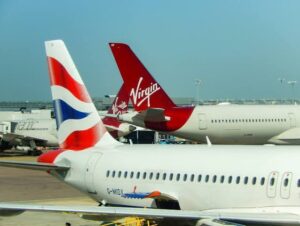
Having completely maxed out their allocated slots, neither UK carrier can expand capacity, such as Virgin Atlantic resuming Abuja operations or British Airways adding a second daily Lagos service, without a formal upward revision of the bilateral pact.
Rather than allowing foreign mega-carriers to unilaterally scoop up domestic passenger feed from regional hubs like Port Harcourt, Kano, or Enugu, the code-share mandate requires revenue sharing, interline ticketing, and operational integration with Nigerian operators.
The policy position follows high-level talks in Abuja between the Minister of Aviation and Aerospace Development, Festus Keyamo, and a British Airways delegation led by its Chief Planning Officer, Neil Chernoff.
During the meeting, British Airways expressed strong interest in increasing its weekly frequencies and expanding direct services beyond Lagos and Abuja to other Nigerian cities.
“We definitely see an opportunity to increase both the opportunity for individuals to travel, but also trade and the various agreements that have happened between the two nations,” Chernoff stated.
While acknowledging that British Airways and Virgin Atlantic have fully utilised their 21-frequency cap, Chernoff noted that Nigerian carriers have yet to exhaust their own allocation under the agreement, adding that the UK flag carrier remains committed to supporting Nigeria’s aviation growth and strengthening connectivity between both markets.
Historically, Nigerian airlines operated at a steep capacity deficit on the lucrative Nigeria–UK corridor, though that gap is rapidly narrowing.
Air Peace currently operates 13 weekly frequencies into London Heathrow and Gatwick from Lagos and Abuja.
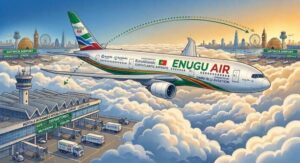
Furthermore, Omni-Blu Aviation, in partnership with Enugu Air, has finalised plans to launch four weekly flights from Lagos to London Gatwick on December 10, 2026, leaving Nigeria with just four unused slots to match the UK’s 21-frequency parity.
Although Keyamo reiterated that Nigeria operates a “free economy” prepared to accommodate increased frequencies, industry analysts warn that reviewing the BASA carries high-stakes regulatory, commercial, and diplomatic implications.

Reopening the treaty gives Abuja significant diplomatic leverage. However, aviation experts caution that raising the ceiling to 24 or 28 weekly frequencies without strict reciprocity safeguards risks widening the capacity imbalance unless Nigerian carriers are guaranteed prime landing slots at London Heathrow, rather than being restricted to secondary airports like Gatwick or Stansted.
The Nigeria–UK route remains one of Africa’s most profitable long-haul markets, long defined by high load factors and steep airfares driven by constrained seat supply.
With Air Peace already operating on the route, Omni-Blu/Enugu Air entering the Lagos–Gatwick corridor this December, and British Airways angling for additional frequencies, the impending surge in seat capacity is expected to put downward pressure on yields, forcing carriers to compete aggressively on fares and onboard product.
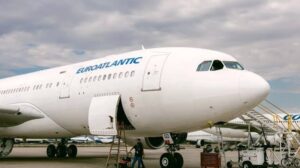
At the same time, analysts point out that Nigeria’s recent push to close its BASA deficit relies heavily on wet-leased aircraft, exemplified by Omni-Blu and Enugu Air securing UK authorisation using a wet-leased EuroAtlantic A330-200.
While wet-leasing enables rapid market entry by using dormant frequencies, long-term survival and profitability under an expanded BASA will require domestic carriers to transition to dry-leased or owned wide-body fleets to protect operating margins against entrenched UK legacy carriers.
Meanwhile, British Airways’ appetite for secondary Nigerian destinations aligns with the Federal Airports Authority of Nigeria (FAAN) and the Ministry’s broader agenda to decentralise international air traffic away from Lagos and Abuja.
Aviation stakeholders note that routing direct UK flights into regional gateways such as Port Harcourt and Kano, backed by mandatory domestic code-shares, would ease domestic transfer bottlenecks while stimulating regional trade and economic activity.
Google+