- Beautiful flower in wrong soil: How incompatible airfield lighting rendered Lagos CAT 3 ILS unusable
- Streamlining Cargo Operations: FAAN Engages Top Freight Agents
- Airline operators, unions clash over multi-billion Naira ticket charge controversy
- Ground handlers to suspend services to two major domestic airlines over mounting debt
- Dual Honours for Olateru: Inducted into Aviation Hall of Fame, ITPN Cement Legacy of Excellence



Beautiful flower in wrong soil: How incompatible airfield lighting rendered Lagos CAT 3 ILS unusable
- NAMA exposes why Nigeria’s airspace isn’t ready for CAT 3
The Director of Safety, Electronic and Engineering Services (DSEES) at the Nigerian Airspace Management Agency (NAMA), Engr. Terese Ihenachor, has revealed that Category 3 (CAT 3) Instrument Landing Systems (ILS) cannot function optimally in Nigeria due to unsupportive environmental factors and critical gaps in auxiliary infrastructure.


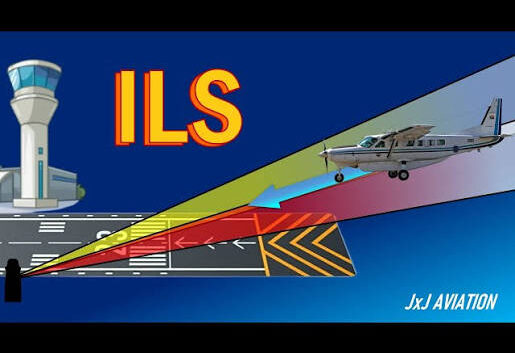
An Instrument Landing System (ILS) is a ground-based radio navigation tool that gives pilots precise horizontal and vertical guidance to land safely during poor visibility or bad weather
Addressing the operational challenges of the high-precision navigational aid, Ihenachor explained that despite its multi-million-dollar procurement in 2019, the CAT 3 ILS installed at the Murtala Muhammed International Airport in Lagos had to be decommissioned and replaced with a brand-new NORMARC CAT 2 ILS to safeguard flight operations.
The agency outlined several core factors preventing the deployment of CAT 3 ILS technology in Nigerian airspace, including airfield lighting mismatch, since CAT 3 ILS requires fully compatible Category 3 airfield lighting to guide aircraft in near-zero visibility conditions.
However, most major Nigerian runways managed by the Federal Airports Authority of Nigeria (FAAN) currently operate on Category 1 lighting.
The Lagos CAT 3 equipment proved hyper-sensitive to local environmental conditions, triggering frequent signal disruptions from minor events such as bird strikes or insect activity.
While NAMA successfully eliminated general power failures by deploying a 24-hour dedicated solar power system for its navigational aids, the surrounding runway infrastructure still lacks the integrated support required for CAT 3 certification.
Ihenachor disclosed that the initial procurement in 2019 ignored internal technical assessments. Professional advice from NAMA engineering directors at the time warned against purchasing CAT 3 systems without first upgrading runway and lighting environments.
She said, “You cannot just buy a beautiful flower abroad without adapting it to your environmental factors. Our operational environment does not permit CAT 3 yet. Before buying CAT 3 ILS, stakeholders must first upgrade the airfield lighting and runway infrastructure to match.”
“It is not rotting away, and it is not wasted. We have plans for them and are taking them to other stations that are not fully functional. That shows you it is not wasted. The one in Abuja isn’t functioning, but it’s downgraded. The one in Lagos was very erratic. Because we can’t have it at those international airports. Moreover, we did not supply this thing. So, the two I met are the ones I’m talking about. I learned that they paid for them years ago.”
“The other ones, they have not brought them. So, recently, GM Navaid told me they supplied only the remaining one or two. Two remaining, I believe. I told them that they can go and install it at Calabar, which needs ILS”.
After recurring outages that required the Lagos system to be repaired more than seven times in a short period, NAMA secured formal approval from the Ministry of Aviation and Aerospace Development to remove the erratic unit.
To ensure continuous operational safety and maximise federal assets, NAMA has structured a redeployment plan requiring a newly commissioned CAT 2 ILS, which is currently operational and functioning reliably at Lagos airport.
Ihenachor stated that, contrary to a report in the media, the uninstalled CAT 3 units are not rotting away, explaining that NAMA plans to deploy the remaining components to low-density, secondary airports such as Calabar, where traffic volumes match the operational limits of downgraded configurations.
The NAMA director disclosed that before removing it, NAMA management sought permission from the Ministry of Aviation and Aerospace Development, stressing that new equipment was available for other stations.
“So, I wrote, I took permission from them because of the safety aspect. So, I installed a brand new ILS, this NOMAC Cat 2, which is functioning up to now. So, I removed it for safety reasons. It compromised safety because of frequent failures”, she added.

She further stated that the equipment’s frequent failures were due to its unnecessary use, because the ILS can operate only when all required conditions are met.
Google+