- TSC crisis: Aviation unions submit 19-Page Memo to Reps, push for review
- IATA Steps Up African Safety Drive With Monthly CASIP Workshops
- Saadia Zahidi appointed new IATA DG as Walsh exits
- Preliminary report out in 30 days as NSIB investigates Enugu Air incident
- Enugu Air aircraft nosewheel badly damaged, runs into 'bush' after landing



ECOWAS Air Travel Reform Stalls as Only One Country Implements 25% Tax Reduction
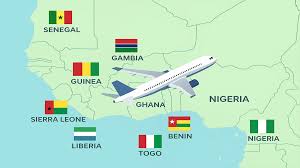
- IATA lauds bloc’s 25% Aviation Tax Cut, faults Slow Implementation
Wole Shadare, Rio de Janeiro, Brazil
The International Air Transport Association (IATA) said the decision by the countries of the Economic Community of West African States (ECOWAS) to reduce airport and travel charges by 25 per cent would help to address the region’s major structural hurdles.

IATA’s Regional Vice President for Africa and the Middle East, Kamil Alawahdi, in an interview with Aviation Metric at the IATA 82nd Annual General Meeting (AGM) in Rio de Janeiro, Brazil, welcomed the idea and lauded the initiative, describing it as an amazing job done by ECOWAS.
He, however, expressed disappointment that only one country in ECOWAS had so far adopted what it noted could derail the sweeping air travel reform in the region.
He said, “First of all, ECOWAS did an amazing job. It’s up to 25% reduction in taxes, fees, levies, and all that, which is perfect. Only one country so far in ECOWAS has adopted it, which is a shame, but I praise the country, but I’m not going to mention it. It’s literally on my agenda to discuss when the other countries are going to apply this ECOWAS consideration, and the prices should drop, all right. But it’s from ECOWAS to ECOWAS that has to drop.”
“There’s no point in saying, I’m going to operate from the ECOWAS state and land in Tanzania and pay $45 APIS, and I charge one way or the other. The price will remain the same or increase. So what would be nice is if I can get all of Africa to sit down and say, look, ECOWAS did this, that will solve the problem we are having about high charges in Africa”.
“They’re really smart. They thought about it. They understand the importance of aviation and its value for Africa, and they made this tough decision. You want the rest of Africa to do the same thing. You don’t want a state like Tanzania coming up and saying, I want $45 for APIS, and I’ll charge one way, which makes no sense to me. In the end, they’re going to harm themselves.”
In aviation, APIS is a security system that collects detailed passenger data, such as passport information, before international flights.
While many countries fund this internally, some nations, such as Nigeria, pass the cost to the traveller as an APIS fee or levy added to the cost of an international airline ticket.
ECOWAS sweeping aviation tax reform, officially titled “Supplementary Act A/SA. 2/12/24 Relating to the Common Policy on Aviation Charges, Taxes and Fees”—was scheduled for full implementation on January 1, 2026.
The policy addresses a major structural hurdle: West African regional flights have historically been among the most expensive globally, with non-aviation taxes and government levies accounting for 60% to 70% of a typical ticket price.
The core objective of the Supplementary Act is to align West African aviation with International Civil Aviation Organisation (ICAO) standards (specifically Article 15 of the Chicago Convention), which mandate that charges remain fair, transparent, and strictly cost-related.
Four major statutory levies that are not directly linked to the provision of aviation services have been marked for total elimination across all 15 member states.
These levies are Ticket Sales Tax (or Ticket Tax), Tourism Tax / Tourism Levies, Solidarity Tax and Foreign Travel Tax.
For the remaining core charges, the bloc mandated a flat 25% reduction in Passenger Service Charge (PSC) and Security Fees/Charges.
ECOWAS and the African Airlines Association (AFRAA) project that full compliance could reduce total ticket costs by up to 40%, making regional travel far more accessible and boosting intra-regional tourism and trade under the African Continental Free Trade Area (AfCFTA).

While Supplementary Acts are legally binding on all ECOWAS member states, translating the regional directive into local enforcement has hit a two-speed reality.
Months passed the January 1, 2026, deadline, and the policy is facing significant turbulence on the ground:
Google+