- NSIB opens probe into Challenger 604 door separation incident
- Private jet forced into emergency landing in Abuja after door detaches
- NAMA spokesman, Musa honoured with prestigious 'Dan Kade of Kontagora' title
- The sky has no gender
- Surging revenues, strong balance sheet drive United Nigeria’s pioneer ₦100bn debt programme



Decoding Nigeria’s 20-Year Civil Aviation Master Plan
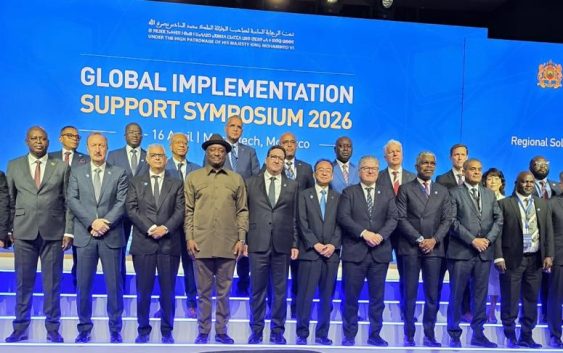
The Civil Aviation Master Plan (CAMP) 2025–2045 is more than a policy document; it is a twenty-year survival guide for an industry that has long struggled with inconsistency, writes WOLE SHADARE
The Nigerian aviation industry stands at a critical inflexion point. Long hampered by fragmented planning and systemic inefficiencies, the sector is now transitioning toward a period of institutionalised growth.


The catalyst for this change is the Civil Aviation Master Plan (CAMP) 2025–2045, a strategic mandate designed to transform Nigeria into a competitive regional hub.
For decades, Nigeria’s aviation sector has operated like a pilot flying through a persistent harmattan haze—full of potential but often obscured by policy somersaults and infrastructure deficits.
However, the recent unveiling of the Civil Aviation Master Plan (CAMP) 2025–2045 signals a departure from the era of fire-brigade management toward a structured, twenty-year trajectory.
Handed over by the International Civil Aviation Organisation (ICAO) to the Minister of Aviation and Aerospace Development, Festus Keyamo, during the April 2026 Global Implementation Support Symposium in Marrakech, Morocco, this document is more than just a manual. It is a strategic mandate designed to transform Nigeria into a competitive regional hub
The Master Plan’s first pillar is the aggressive modernisation of airport infrastructure. While the ₦712 billion redevelopment of Murtala Muhammed International Airport (MMIA) is the current centrepiece—targeting a total overhaul of Terminal 1 and expansion of Terminal 2—CAMP looks further.
It envisions the evolution of Nigerian airports into Aerotropolises. The goal is to move away from airports as mere transit points and toward integrated business cities that drive trade, logistics, and non-aeronautical revenue.
This transition is already being tested through the formal concessioning of the Akanu Ibiam International Airport in Enugu to Aero Alliance, signalling a shift toward sustainable public-private partnerships (PPPs).
Safety remains the bedrock of the aviation industry. Under CAMP, Nigeria is doubling down on its commitment to ICAO standards with a focus on Total Radar Coverage (TRACON) upgrades; ensuring real-time, high-fidelity monitoring of the Nigerian airspace, strengthening the Nigeria Civil Aviation Authority’s (NCAA) ability to enforce strict compliance and the encouragement encouraging private sector players to establish local MRO facilities to reduce capital flight and ensure fleet airworthiness.
Perhaps the most insightful aspect of the plan is its focus on Human Capital Development. Minister Keyamo has rightly noted that infrastructure without a skilled workforce is a monument to waste.
CAMP outlines a tripartite priority for the workforce by identifying the skill gaps of the next decade, ensuring aviation colleges produce graduates that meet industry-specific needs and expanding access to aviation careers across all communities to secure a diverse talent pool.
The Civil Aviation Master Plan is a bold statement of intent. It aligns with the National Development Plan and provides the policy coherence that investors have long craved. However, as any industry veteran knows, the beauty of a flight plan is not in the drawing, but in the execution.
Without a dedicated CAMP Delivery Unit that includes private-sector representatives, the plan risks being shelved, as with previous master plans.
The formal receipt of the 2025–2045 CAMP from ICAO is just the end of the beginning. The next logical step—and the one the industry is demanding—is a rigorous stakeholder evaluation and critique before the Ministry moves toward final adoption and codification.
One expects the Ministry to call a ‘Special Session’ or a ‘National Aviation Summit’ specifically to deconstruct the CAMP. Keyamo has already committed to gathering feedback from stakeholders and citizens alike to refine policies.
Before the CAMP becomes law, the Nigeria Civil Aviation Authority (NCAA) must ensure it doesn’t conflict with existing Nigerian Civil Aviation Regulations (Nig. CARs).
The NCAA has been reviewing its Policy and Procedure Manuals (PPM) as recently as April 13, 2026. A formal “Gap Analysis” will be conducted to see where the ICAO roadmap requires new legislative backing or changes to the 2022 Civil Aviation Act.
Kudos must be given to the immediate past Director-General of the NCAA, Capt Musa Nuhu, and his team, who initiated the process and paid $669,800 for the CAMP.
Nuhu and the ICAO Secretary-General, Mr Juan Carlos Salaazar, signed the agreement during the ex-DG’s visit to ICAO in Montreal, Canada, on June 22, 2023, before he was removed from office.
He said after signing the deal with ICAO, “The Masterplan, when implemented, will further unlock opportunities in the Nigerian aviation industry. This is a major step in repositioning the nation’s aviation industry to attain its full potential and make significant contributions to the nation’s economic growth and development.
All relevant stakeholders within and outside the aviation ecosystem will be involved in developing and implementing the CAMP.”
For his effort, he deserves a huge commendation and recognition for setting up the template for what has the potential to revolutionise the nation’s aviation ecosystem and significantly increase the nation’s Internally Generated Revenue (IGR).
Keyamo and the NCAA DG, Capt. Chris Najomo must also be praised for following up on the process in which the Minister officially received the CAMP.
But as a key observer of the aviation industry in Nigeria, a master plan is only as good as its first three years of execution.
Here is an analysis of what must happen next to ensure CAMP doesn’t become another high-level souvenir from a global symposium.
Local airlines will likely critique the CAMP if it focuses too heavily on infrastructure (FAAN’s domain) and not enough on the economic de-risking of the airline business. They will want to see the specific Cape Town Convention protections mentioned in the CAMP translated into lower insurance premiums—a core theme of the recent NAAIS summit.

Watch for the inter-agency coordination. The CAMP will fail if the NCAA, FAAN and the Nigerian Airspace Management Agency (NAMA) continue to work in silos. The true litmus test for Nigeria will be whether we can maintain policy continuity across multiple political administrations over the next 20 years.
Google+