- Enugu Air: FAAN Calls for Patience as NSIB Begins Investigation
- Unremitted 5% TSC: Aviation Unions Issue 7-Day Picketing Notice to Defaulting Airlines
- Chaos to Order: Nigeria Overhauls Airport Rules After 21 Years
- FG Approves ₦46bn for Kano Airport Runway Overhaul
- TSC crisis: Aviation unions submit 19-Page Memo to Reps, push for review



Nation playing aviation underinvestment catch-up, says Kuku

- Infrastructure only half the battle, warned Sanusi, Uriesi
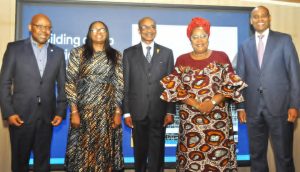
The Managing Director of the Federal Airports Authority of Nigeria (FAAN), Mrs Olubunmi Kuku, delivered a blunt assessment of Nigeria’s aviation investment climate at the first-quarter 2026 Aviation Safety Round Table Initiative (ASRTI) Business Breakfast Meeting in Lagos on Thursday.

Kuku noted that the country is still playing catch-up after years of underinvestment, stressing that the government alone cannot fund the scale of development required across the sector.

Her statement highlights a legacy of policy reversals that have made international investors wary of committing long-term capital to Nigeria’s aviation infrastructure.
Kuku noted that while global players like Changi Airport Group (Singapore) and TAV Airports (Turkey) have previously shown interest, the lack of follow-through has created a cycle of hesitation.
In late January 2026, the Federal Government finally signed a formal concession agreement with Aero Alliance for Akanu Ibiam International Airport.
Kuku and Minister of Aviation and Aerospace Development Festus Keyamo are using this as a “litmus test” to prove that the process can be transparent and worker-friendly.
Recognising that broad policy shifts take time, Kuku has shifted focus to Internally Generated Revenue (IGR). FAAN recently secured approval to retain a higher percentage of its revenue (previously remitting 50%) to fund immediate upgrades, such as the MMIA Terminal 1 reconstruction.
While Kuku is pushing for “sincerity” in the process, industry veterans like the Managing Director of Aero Contractors, Capt. Ado Sanusi and the COO of Ibom Air, Mr George Uriesi, warned at the same meeting that infrastructure is only half the battle.
They argued that without 30% transit traffic—a benchmark Nigeria currently falls short of—modernised terminals will struggle to become the hubs the government envisions.
In a related development, the aviation pressure group, Aviation Safety Round Table (ASRT), has put forward to the Federal Government the creation of a business-friendly environment with low taxes and tariffs.
It also sought transparent regulations, strategic investment in airports, incentivisation of airlines, and soft loans for aviation-related industries to drive innovation and the development of world-class infrastructure.
ASRT President, Air Commodore Ademola Onitiju (Rtd), advocated the utilisation of the public-private partnership model for aviation infrastructure development, saying, “We still hold the view that funding aviation infrastructure through private-sector investments together with government support is the way to go.”
“Without prejudice to the content of our amazing Amazon’s presentation, | wish to disclose that the ART expects a new MMIA intentionally designed to function as a regional and global hub with the capacity to handle 30 million passengers annually, connect more than 50 airlines to more than 100 cities worldwide.”
“We are hopeful for an airport that can seamlessly blend efficiency. technology and a terrific passenger experience. We expect an airport with a strong commitment to continuous maintenance, innovation and expansion. We are also of the view that strong consideration should be given to the open skies policy to encourage international airlines, enhance competition and connectivity”, he stated.
During this policy advocacy session, the ART urged industry leaders to consider green aviation, sustainable fuels, and eco-friendly, futuristic airports.
On how to grow the aviation sector, Onitiju said there was a need to discuss the importance of an aviation hub in the efforts to boost the aviation sector’s contribution to Nigeria’s Gross Domestic Product (GDP).
Quoting the Nigeria Bureau of Statistics (NBS), he said the aviation sector contributes approximately $1.7 billion to $2.5 billion annually to Nigeria’s GDP, adding that the sector supports over 216,000 jobs, including direct, indirect and induced benefits.
Aviation-linked tourism, he reiterated, also contributes about $454.1 million to the GDP.
He, however, lamented that infrastructure limitations, together with operational challenges such as rising costs, are among the impediments to the sector’s growth.
Nigeria’s air transport operations, according to him, are highly concentrated in Lagos at about 29%, Abuja at 32%, and Port Harcourt at 10.6%.
These activities account for over 70% of the sector’s GDP contribution, and, with regard to passenger traffic, the sector handles over 16 million domestic passengers and over 3.5 million international passengers annually.
He lauded the incredible jobs of heads of the aviation agencies for the work they are doing, saying, “It is customary with us at the Aviation Round Table to recognise and commend efforts by leaders of the industry when noticeable strides are made with a view to encouraging them to do more for our dear country-Nigeria while at the same time holding them to account and responsible to the Nigerian”.
Google+
