- Nigeria’s Agricultural Export Ambition Takes Flight: A Critical Look at the New Air Cargo Drive
- United Nigeria Airlines: Turning Dream into Reality
- Evans:Why intra-African air fares 60% higher than European routes
- Teriba:FG’s policy opportunity for women to aspire higher in aviation
- Lack of transit facilities greatest barrier to becoming global player-Okonkwo


United Nigeria Airlines: Turning Dream into Reality
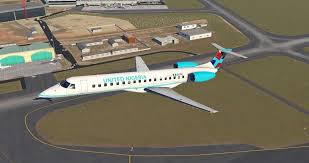
The story of United Nigeria Airlines is a microcosm of the Nigerian spirit—resilient, ambitious, and unyieldingly optimistic. Its mission is to connect the Nigerian diaspora to their roots and the Nigerian economy to the world, writes WOLE SHADARE
In the volatile landscape of African aviation, the five-year mark is often a precarious milestone. Yet for United Nigeria Airlines (UNA), February 12, 2026, marks the moment a domestic dream is turning out to be a global reality.

Although it has not yet expanded to an intercontinental route, it has laid a strong foundation for the future. It has also decided to grow its operations gradually, rather than like an airline that expanded without proper planning, which has brutally exposed its underbelly.
Under the theme “From Vision to Velocity,” the airline celebrated its fifth anniversary last week not only by looking back on its first flight from Lagos to Enugu in 2021, but also by unveiling a roadmap that positions it as a potential continental aviation powerhouse.
Starting with just four narrow-body aircraft amid a global pandemic, UNA has defied the odds against currency volatility and infrastructure gaps.
The numbers speak volume of an airline that is focused. From a single route to 16 Nigerian cities and a regional footprint in Accra, Ghana, the airline’s story appears exciting, as over 2.5 million passengers have been airlifted since inception.
It currently operates 10 aircraft and plans to more than double that capacity by year-end. It achieved IATA Operational Safety Audit (IOSA) certification within just two years—a record for the region.
The most ambitious part of the dream is the airline’s upcoming intercontinental expansion. Chairman Professor Obiora Okonkwo recently confirmed a significant increase in the fleet to 21 aircraft by mid-2026.
The introduction of Airbus A330 wide-body jets (the first arriving on July 26, 2026) signifies a new era in which a Nigerian-owned carrier competes directly on the world’s busiest long-haul corridors.
UNA’s strategy for the next five years extends beyond the cockpit. The airline is building a self-sustaining ecosystem to insulate itself from the common pitfalls of Nigerian aviation.
Moving away from third-party reliance to establish a full Maintenance, Repair, and Overhaul (MRO) facility within three years.
Plans are underway to list on the Nigerian Exchange (NGX) within three years to ensure transparency and public participation in its growth.
It is a common observation that while Nigeria has a bustling domestic aviation market, almost none of its major airlines are listed on the Nigerian Exchange Group (NGX).
While a few, such as United Nigeria Airlines, have recently expressed plans to go public by 2028–2030, most have historically avoided the stock market for several strategic and structural reasons.
The hesitation generally stems from a mix of fear of scrutiny and the brutal economic realities of flying in Nigeria.
Listing on the stock exchange requires a level of transparency that many Nigerian airline founders—often powerful, high-net-worth individuals—are uncomfortable with.
Public companies must publish audited financial statements quarterly. Many domestic airlines operate with family-style governance where the lines between personal and company finances can be blurry.
Air Peace’s owners, such as Mr Allen Onyema, have explicitly noted that minority shareholders can be a distraction.
There is a fear that small-scale investors might sue over management decisions or interfere with the founder’s long-term vision in favour of short-term dividends.
Aviation is a high-topline, low-margin business globally, but in Nigeria, it is particularly volatile. If an airline lists and then reports a loss, its stock price would plummet.
Staying private allows them to weather red years without the public panic that destroys share value.
Undaunted, the airline’s management believes the best way to run a highly efficient carrier is to list it on the stock market, given the many benefits it offers.
Speaking at a press conference with the theme, “From Vision To Velocity – Five Years of United Growth: Charting the Next Frontiers,” Okonkwo reflected on the carrier’s modest take-off on February 12, 2021, when it operated its maiden flight from Lagos to Enugu.

He described the journey as one driven by resilience, calculated ambition and an unrelenting quest for operational excellence.
Okonkwo said the airline has ordered 11 aircraft, including two A330-200s and six 737-800s, in preparation for operations.
He disclosed that one of the aircraft, an A330-200, will be delivered to the airline by the end of the second quarter of this year, while the others will be delivered later in the year.
“We are starting some regional and international routes by the end of the second quarter of this year. One of the A330-200s will be delivered to us by July 26; the second will arrive in October, and by the end of the second quarter, we will fly direct to New York.
“We plan to start an additional six regional and continental routes on or before the second quarter of 2026. These routes include, but are not limited to, Dakar, Monrovia, Johannesburg, etc. Plans are in an advanced stage to commence international flights to the Gulf states, Europe, and America by summer 2026, all being equal. These destinations include Dubai, Jeddah, Rome, New York, and the UK.
”To add to our existing 10 Aircraft in our operations as of today, we have acquired six 737 – 800 NG from Southwest Aviation and are finalising negotiations for an additional three of the same aircraft type, all scheduled to be delivered before the end of the second quarter, starting from March 2026 when we take delivery of the first two aircraft.”
“We had also leased 2 A330 – 200 wide-body aircraft to support our international operations from Anka Aviation Turkey, to be delivered between July and October 2026, with the first delivery on the 26th of July, amongst other aircraft acquisition negotiations that deliveries may mature beyond 2026,” he said.
Speaking further on the roadmap for the next five years, he stated the airline’s ambition is to transform it from a leading national carrier into a recognised continental aviation powerhouse, with strategic regional, continental, and eventually intercontinental routes.

Despite hurdles such as currency volatility and infrastructure gaps at major hubs, an indigenous carrier can become a reference point and remain globally competitive. They aren’t just flying; they are leading the charge for a more connected and mobile Nigeria.
Google+