- Ground handlers freeze XEJet operations over N300m unpaid debt, warn other carriers
- Airline operators threaten shutdown as unions defend ₦15bn picketing action
- SAHCO elevates inclusive aviation services with landmark AmbuLift acquisition
- 2027 Aviation Hall of Fame: NAMA boss Farouk Umar, pioneer MD, Ibrahim Auyo nominated for induction
- Musa, NAMA director bags doctoral fellowship award



Tension brews over pilots’ 50% pay rise, airlines, stakeholders differ over fare hike
- Operators to match pay with counterparts overseas
- Tax burden narrative misleading-NCAA
- High interest rate, insurance premiums killing domestic operation-AON
Many Nigerian airlines are beginning to capitulate to pilot demands, though the concessions are being made with significant caution due to the industry’s tightening financial margins.
The move to accede to these demands is largely seen as a strategic survival manoeuvre to prevent a total brain drain to international carriers.


Chairman of United Nigeria Airlines and spokesman for Airline Operators of Nigeria (AON), Prof. Obiorah Okonkwo, admitted to the tension brewing between airline owners and pilots over pay rise.
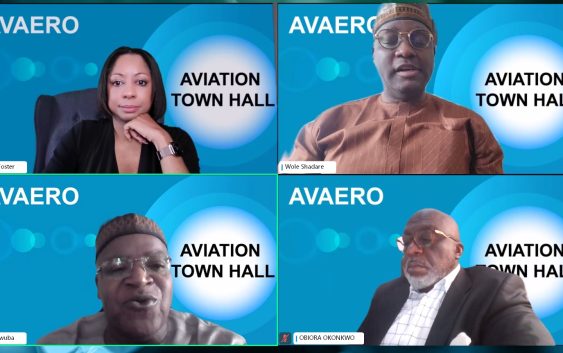
Okonkwo at a webinar with theme, ‘High Air Fares: Are Airlines’ Really the Problem?’ which had panelists such as the President of the National Association of Nigeria Travel Agencies (NANTA), Dr. Yinka Folami, President, Aircraft Owners Association of Nigeria, Alex Nwuba, Executive Commissioner (Operations), Federal Competition and Consumer Protection Commission (FCCPC), Louis Odion represented by Director, Corporate Affairs, FCCPC, Ondaje Ijagwu, Director of Public Affairs and Consumer Protection, Nigeria Civil Aviation Authority (NCAA), Michael Achimugu, Aviation Editor, New Telegraph and Publisher of Aviation Metric, Wole Shadare and Principal Managing Partner of Avaero Capital Partners, Sindy Foster disclosed that in the last few weeks, there had been a lot of tension.
Obiorah lamented the high costs airlines have had to bear, listing high insurance premiums, high jet fuel prices, declining passenger traffic, and high interest rates among the burdens they have had to shoulder.

The debate surrounding domestic airfares in Nigeria intensified, with travel agencies, regulators, and lawmakers demanding clarity and transparency.
Okonkwo said, “In the last few months, there has been a lot of tension. We are almost at the point of paying almost the same amount as pilots flying from London to America. The pilots are seeking a 50 per cent pay rise, highlighting the high cost of operations, which he said has given rise to high air fares.
While individual airline agreements vary, the broader consensus reached between major operators and the National Association of Aircraft Pilots and Engineers (NAAPE) involves several critical shifts.
To combat the erosion of purchasing power, some airlines have agreed to peg certain duty tour allowances and bonuses to the USD/NGN exchange rate, effectively providing a hedge against further naira volatility.

In response to the global pilot shortage, airlines have introduced multi-year retention contracts offering significant lump-sum bonuses to captains who commit to a minimum of 24–36 months.
Analysts predict that these higher labour costs, combined with the new tax regime, will inevitably lead to another round of ticket price hikes in the near future.
To fund the higher salaries, some airlines are expected to cut thin (low-traffic) domestic routes to focus their better-paid crews on high-yield “golden triangle” routes (Lagos–Abuja–Port Harcourt).
The aviation industry is witnessing a “poaching war” as airlines aggressively hike pilot salaries to prevent their flight decks from being emptied by domestic and international competitors. This trend is particularly acute in Nigeria, where the rapid expansion of new state-owned and private carriers has intensified the scramble for a limited pool of “ready-made” or type-rated pilots.
Nwuba disclosed that fares have outpaced average income growth, stressing that passenger demand is shrinking due to high fares.
Foster pointed out that capacity constraints, not just pricing, drive astronomical ticket prices, adding that they will remain inevitable as long as there is a need to increase capacity or as long as underlying costs come down.
The Director of Public Affairs and Consumer Protection of the Nigeria Civil Aviation Authority (NCAA), Michael Achimugu, outlined several reasons why the authority believes the tax burden narrative is misleading.
He pointed out that while ticket prices jumped significantly in December 2025 (with some 45-minute flights selling for ₦500,000), there was no corresponding increase in taxes or aviation fuel prices during that period.
Achimugu explicitly dismissed the claim that domestic airlines pay up to 18 different taxes, stressing that during private meetings, airlines admitted they do not pay the volume of taxes they bandy around in the media.
“This conversation requires honesty in totality if you want to truly resolve the issues,” he added.
Shadare acknowledged the Federal Government’s enormous support for the sector, particularly for airlines in recent times, but further sought the government’s assistance in helping the carriers navigate the tough environment in which they operate.
He further stated that aviation contribution to Nigeria’s Gross Domestic Product (GDP) stands at $2.5 billion in 2025 representing just 0.7% to the nation’s GDP with 216, 000 jobs compared to the United Kingdom’s £ 22 billion; United States $1.45 trillion; Egypt $3.5 billion; South Africa $5.7 billion and Ethiopia $4.2 billion; an indication that government further support is needed to grow the sector.
Folami dismissed suggestions that government taxes are responsible for seasonal increases in domestic airfares, stressing airline-controlled surcharges as the main driver of December fare spikes.

Ijagwu, on his part, said his agency was already investigating some airlines regarding alleged fare collusion, adding that, inasmuch as the FCCPC does not control prices, his agency’s responsibility is to ensure fairness in line with its laws and to protect consumers from exploitation.
Google+