- United Nigeria Airlines headlines 2026 Ndigboamaka traders cup
- How market dynamics made flying accessible again
- Minister: Competition, increased seat capacity driving down airfares
- Ground handlers freeze XEJet operations over N300m unpaid debt, warn other carriers
- Airline operators threaten shutdown as unions defend ₦15bn picketing action



T1: Dragging 47-year-old facility into digital age
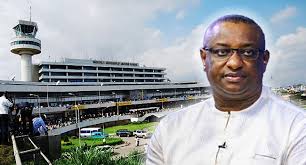
The completion of the modernisation project at Murtala Muhammed International Airport (MMIA) won’t be merely an aesthetic upgrade; it will be a fundamental shift in Nigeria’s aviation strategy. By integrating the existing Terminal 2 (T2) with a completely rebuilt Terminal 1 (T1), the government aims to create a unified super-hub capable of handling 17.6 million passengers annually, writes WOLE SHADARE
For decades, the Murtala Muhammed International Airport (MMIA) has stood as a symbol of Nigerian resilience—and, more recently, as a case study in what happens when a nation’s aviation ambitions collide with an infrastructure ceiling.

Originally designed in the 1970s to handle fewer than 200,000 passengers annually, the terminal has been pushed to its limits by a 2024 traffic surge, with over 4.33 million international travellers passing through its gates.
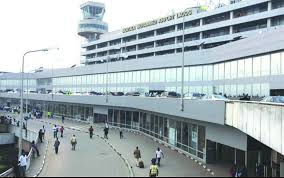
As of March 2026, the breaking point has officially been reached, and the Federal Airports Authority of Nigeria (FAAN) is finally pulling the lever on a long-awaited transformation.
Under the leadership of FAAN Managing Director Olubunmi Kuku and backed by a ₦712 billion federal investment, Terminal 1 (T1) is now entering a complete 22-month shutdown for a total structural overhaul.
A new skywalk will finally bridge the gap between the ageing T1 and the modern T2, turning two isolated buildings into a single, efficient hub.
The new terminal will feature sensor-based climate control and lighting that adjust in real time based on passenger density, addressing the chronic heat and darkness complaints of the old T1.
The apron is being enlarged to accommodate more wide-body aircraft, ending the era of arriving flights holding on the taxiway for an available gate.
Dedicated transit zones will allow regional travellers to connect between flights without the need to re-clear immigration, bringing MMIA closer to the standards of Addis Ababa or Johannesburg.
New independent ring roads and a bridge leading directly to Terminal 2 are being built to address the notorious toll-gate gridlock.
To keep Lagos connected to the world while T1 is stripped to its frame, FAAN has deployed an 8,000-square-meter temporary departure hall.
The numbers tell a story of immense potential. If the project remains on schedule, MMIA’s capacity will leap to 17.6 million passengers per year—a nearly fourfold increase.
For Nigerian aviation, this isn’t just about glass and steel; it’s about reducing the hidden tax on airlines caused by turnaround delays, fuel-wasting taxiing, and the reputational cost of a substandard gateway.
However, as many in the industry have noted, true transformation requires more than just new halls.
It will depend on the stability of the power grid, the efficiency of ground-handling partners, and FAAN’s ability to manage the inevitable friction of a live-site construction project in Africa’s busiest city.
To keep the airport running while construction continues, temporary solutions have been rolled out. These include a provisional departure hall with three gates and a peak handling capacity of roughly 1,500 passengers, designed to absorb pressure and maintain continuity during the most
The reforms underway reach deeper into how the airport functions day to day. According to FAAN, early gains are already visible: the introduction of electronic boarding gates and upgraded screening equipment has begun to slash passenger processing times in sections of the old terminal—from nearly two hours at peak periods to closer to one, signalling tangible efficiency gains.
As with any project of this scale, the path forward is not without friction. Funding timelines must be carefully managed, construction schedules remain vulnerable to delays, and the sheer complexity of keeping a major international hub operational while rebuilding it in real time continues to test planners and contractors alike.
Beyond the terminals themselves, equally critical supporting systems demand sustained focus, a stable power supply, dependable ground-handling operations, and improved surface transport links to and from the airports, underscoring that true transformation will depend on more than bricks, steel, and glass.
The Murtala Muhammed International Airport can rise to the task of rehabilitation and modernisation only if modernisation is matched by efficient execution, integrated transport planning and continued investment in operational systems.
The airport’s reconstruction represents a major leap forward from congestion to a capacity-ready hub. If completed on schedule, with the new terminal infrastructure delivering on its promises, MMIA could pivot toward the demands of modern air travel, capable of handling nearly 20 million travellers annually, and do so with a passenger experience closer to global standards.
The reconstruction and modernisation of Terminal 1 at Murtala Muhammed International Airport (MMIA) has elicited a wide range of reactions from industry players.
While there is nearly universal agreement that the 47-year-old facility is decrepit and a disgrace, the concern for proper execution of the job to justify the ₦712 billion price tag and the funding model remains a point of intense debate.
Most airlines strongly support the upgrade. They have long complained that the old terminal’s comatose state results in high operational costs, turnaround delays, and aircraft damage caused by substandard ground equipment.
While travellers are eager for a world-class experience with better cooling, functional toilets, and shorter queues, there is significant anxiety regarding the 22-month construction period.

There are concerns that the temporary terminal, while modern, has a lower capacity (roughly 1,500 passengers per hour), which may lead to significant bottlenecks during peak seasonal periods.
Google+