- Pilots' retention failing despite rising salaries
- Military officers smuggle arms onboard aircraft, threaten airlines, airport staff
- Tweaking FAAN's cargo tariffs after two decades
- Qatar redefining pet travel, 54.3 million travellers passed through Doha in 2025
- FAAN’s increased revenue paradox despite declined cargo throughput in 2025


Military officers smuggle arms onboard aircraft, threaten airlines, airport staff
- Yerima, another officer, fingered in safety breaches
- Nigeria risks ICAO rule violation on arms carriage
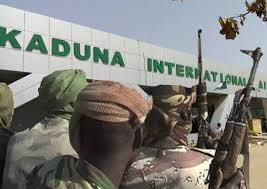
The Federal Government’s concern regarding firearm violations by security operatives on commercial flights has intensified following high-profile breaches of aviation security protocols.
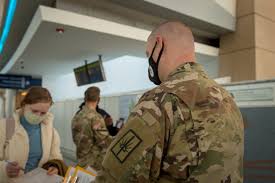

These incidents highlight a recurring friction between military/paramilitary privilege and the strict, non-negotiable safety standards of civil aviation.
A major point of tension involves security operatives—often in uniform or accompanied by armed escorts—who attempt to bypass mandatory passenger screening at airports, particularly Abuja and Lagos aerodromes.
Consequently, the Minister of Aviation and Aerospace Development, Mr Festus Keyamo, is set to meet President Bola Tinubu today to discuss the persistent violations of security protocols, including the failure to hand over or demobilise their weapons before boarding commercial aircraft.
The meeting with the President is intended to rein in the officers and prevent a breakdown of law and order at the airport, which is a clear violation of Annexe 18 of the International Civil Aviation Organisation (ICAO), to which Nigeria is a signatory.
A source close to the Minister, who spoke to Aviation Metric on condition of anonymity, said the incessant reports of violations of international civil aviation rules were worrisome.
This is coming amid the involvement of Lt. Adam Mohammad Yerima, known for a previous public standoff with FCT Minister Nyesom Wike, who was accused of attempting to bypass security screening at a Nigerian airport while armed with a pistol in November last year.
An official of ValueJet told our correspondent that the airline staff intercepted him.
He said, “Standard procedure requires security personnel to declare, unload, and hand over firearms to airline or airport security for safekeeping, rather than bypassing screening with them.”
Just last week, another incident involving a military officer who smuggled arms onboard ValueJet without informing the airline had forced the carrier to take the matter up with the military hierarchy through the Minister with a view to stemming the serious security threat.
The incident raised concerns about safety protocols, including the potential consequences of a passenger carrying arms on a flight.
In some instances, when airlines enforce NCAA rules, military institutions have historically viewed the interception as “disrespectful,” leading to institutional friction between the Ministry of Aviation and the Ministry of Defence.
Under the NCAA regulations and the National Civil Aviation Security Programme (NCASP), the rules for firearms are explicit.
Under the rule, no passenger, including uniformed personnel, is permitted to carry a firearm into the sterile area or cabin of a commercial aircraft, just as firearms must be declared at the security checkpoint, unloaded, and surrendered to the airline for carriage in the aircraft’s hold in a secure, locked container under the supervision of AVSEC and the pilot-in-command.
The carriage of arms and ammunition by air is primarily governed by ICAO Annex 18 – The Safe Transport of Dangerous Goods by Air, as ammunition falls under Class 1 (Explosives) of the dangerous goods classification.
However, because arms and ammunition also pose a security threat, they are heavily regulated by ICAO Annexe 17 – Aviation Security, which sets standards for preventing unauthorised weapons on board.
While ICAO sets the global standards in Annexe 18, individual member states, such as the Nigerian Civil Aviation Authority (NCAA) in Nigeria or the Federal Aviation Administration (FAA) in the US, are responsible for incorporating these standards into their national legislation and enforcing compliance.
There have been recent reports of high-ranking officers attempting to board commercial flights with sidearms without the required declaration.
Airline staff and Aviation Security (AVSEC) officers frequently report being threatened or intimidated by armed security agents who refuse to follow standard boarding procedures.

The Federal Airports Authority of Nigeria (FAAN) has previously accused agencies such as the Nigeria Customs Service of blatant abuse of the privilege of carrying firearms on airport premises, stressing that firearms should be carried only by designated duty officers in specific areas.
Google+