- FAAN sparks Next-Gen interest with NYSC, high school aviation career programme
- FAAN targets seamless travel at MMIA with Biometric gates, digital upgrades
- United Nigeria Airlines headlines 2026 Ndigboamaka traders cup
- How market dynamics made flying accessible again
- Minister: Competition, increased seat capacity driving down airfares



Aisubeogun: How Cessation Of Int’l Routes Robs Nigeria of Billions of Dollars

- Laments Growing Losses To Foreign Carriers, Skewed BASA
Former Managing Director of the Federal Airports Authority of Nigeria (FAAN), Richard Aisubeogun disclosed that the demise of some Nigerian airlines and the cessation of international routes by Arik, Bellview, Medview, Virgin Nigeria and others have robbed the nation of billions of dollars and foreign exchange as a result of skewed Bilateral Air Services Agreements (BASA) against the country.
Aisuebeogun, in a paper he presented at the Business Day OAL Law and Development Summit with theme, “How Law Can Be a Tool For Revenue Generation And Job Creation” lamented that Nigeria has lost out billions of dollars and foreign exchange without having a virile national air fleet to obtain the reciprocal benefits in the bilateral aviation trade agreement.

He pointed out that the International Air Transport Association (IATA), revealed that international airlines sold tickets worth $1.4 billion to Nigerian travelers in 2017.
That piece of information according to him represents the growing losses that Nigerian airlines are losing to foreign airlines.
The BASA have become uneven with one party seeking to take advantage of the weaker side to have more flights than their counterparts. Not a few have given it different terms ranging from ‘skewed’ to ‘imbalance and one-sided’ among others.
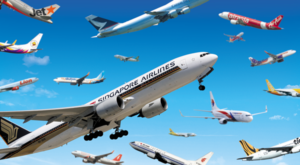
Never has BASA been talked about than in Nigeria where everybody has become an expert in the subject. Government has been taken to the cleaners because of what they describe as its lackadaisical attitude and lack of policy foresight to protect Nigerian carriers that are not only weak to compete but offer little in terms of financial might to compete with the smallest airlines in Europe.
Nigeria presently has 90 BASA pacts with only about 39 of it active. Many of these have been reviewed to create opportunities for domestic carriers, but are largely not utilised. Specifically, domestic carriers are yet to utilise 10 per cent of the air pact due to their limited capacity.
Currently, 33 foreign carriers operate in and out of Nigeria almost on a daily basis. Among them are nine African carriers. Air Peace is the only Nigerian carrier on international scene offering no tangible or inconsequential air services to Dubai.
Since COVID-19 outbreak, the carrier is yet to resume the Dubai route that it is extremely finding difficult to cope with amid the great services offered by Emirates and other others on the Dubai-Lagos route.
While governments and parties to bilateral air service agreement can delegate their rights and interests in such agreement to private air carriers, the former FAAN boss disclosed that the Nigerian situation had simply failed to maximise these potentials.
His words, “To satisfy the bilateral agreements, it was a crucial requirement for most countries to own a national air carrier(s) to satisfy mutual obligations under the numerous bilateral air service agreements.
“State-owned air carriers are seen as a projection of the government of that State and thus treated with dignity and diplomacy. However, with the deregulation of the aviation sector, most capitalist countries allowed private enterprises to drive commercial activities thus reducing public investment in purely commercial sectors such as aviation”.
Whilst Nigeria as a sovereign nation would frown and passionately seek redress in any event where a foreign power and counterpart to any bilateral agreement discriminates any Nigerian state-owned airline or enterprise, he reasoned that the passion is usually comparatively weaker in coming to the defense of private enterprise airlines for lack of direct interests.
According to him, the local private airlines lack the financial capacity to compete, adding that cost of landing slots have been too high to simply maintain in many international routes
“With the absence of a national air fleet, and local private airlines that lack capacity —- an imbalance or lopsided relationship has been inadvertently created in these bilateral air service agreements. Being a business venture, discussions abound – which has bifurcated between desirability of national air carriers and profitability of national carriers”.
Some industry experts have argued that the business of aviation has evolved, and that despite the desirability of the national air fleet or flag carriers in line with the spirits of bilateral air service agreements, the profitability of such national air carrier has been questioned thus leading to re-organisations, joint-venture and outright privatisation.
In Africa, it is reported that only Ethiopian Airways, Kenyan Airways and South-African Airways are the most profitable.
Secondly, the propriety of a national air carrier reflects the political sentiment of each country; whether free-market or protectionist.
A lot of the argument depends heavily on the trade policy of the country which determines their priority. Therefore, where there is inconsistency of political will to maintain a protectionist stance, state-owned carriers may likely run into troubled waters when state funding is stopped.
Aisubeogun submitted that whilst the foregoing arguments paints a terrible outlook of national air fleets and ultimately government investment in state-owned airlines, it neglects Nigeria’s potentials to succeed in running a state-owned air carrier, having a strategic advantage of being the largest population and economy.
Google+