- Air Peace takes delivery of E190 jet, breaks tradition on aircraft naming
- How mountain of debt is ‘grounding’ Nigeria’s aviation
- Lagos light rail to connect MMIA directly to Marina, city center, FAAN, CCECC mark landside concrete work completion
- IATA urges global support for CORSIA as aviation carbon scheme hits 10-year mark
- Etihad Airways, Ibom Air ink interline deal connecting Nigeria, Etihad's network



Airport encroachment: Tackling overall safety, intrusion threat
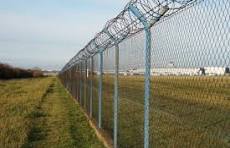
Many of Nigerian airports are poorly fenced leading to massive encroachment into aerodrome premises. While securing an airport perimeter seems daunting, it’s completely doable, writes, WOLE SHADARE
.Outside threat

While this is a startling fact, it’s reality. Airports are literally the gateway to the world, and they post a high risk of intruders of all kinds including ground, vandalism, technology hacking, air, among others. Airports never sleep, and neither do the potential intruders.
Surprisingly, 99% of airport security is placed on protection of the front of the airport: police at the front door for drop off of passengers, airport authorities’ screening, security cameras everywhere, access control on all interior doors, and bomb sniffing dogs.
But the back door is only protected by a chain link fence and nobody is watching. No security cameras. No security guards, and it is easy to breach a fence by cutting a hole or just running over a section of fence with a vehicle.

So, putting all other intrusion threats aside, what are the side effects of an airport perimeter breach besides the obvious fence-line encroachment?
Here are some potential consequences to think about which include intruder having direct access to planes on the runway taxiing or ready to take off, general loss of property through theft, general loss of property through destruction, perimeter fence and other security system damage and destruction.
Others are flight delays, flight cancellations, aircraft sabotage and security lockdown airport-wide—temporary or longer-term.
Struggle for land
Part of the crisis threatening peace in Africa is the struggle over land and natural resources. This crisis is rooted in a series of structural, historical, and socio-economic factors. It is also driven by increasing urbanisation, land-grabbing, demographic pressure, inadequate property rights, and conflicting land tenure systems.
There are many unresolved land-related crises in many of the country’s airports as the Federal Airports Authority of Nigeria (FAAN) is fast losing its assets to land grabbers and Omo Onile (sons of the original landowners), who assert ownership of land in many parts of the nation. It is believed that all government institutions and facilities are built on land acquired from original owners in public interest.
From Lagos to Port-Harcourt to Enugu, Ilorin, Nigerian College of Aviation Technology (NCAT), the situation is the same.
In Lagos, the encroachment on the land, which begins from the Shasha area to Mafoluku Area, Ajao estate and Ikeja, is already giving FAAN’s management and the Federal Government a sleepless night.
Consequently, many of the developers whose houses are built very close to the runway and other critical safety areas have been told risk demolition of their houses.
Ajao Estate residents are building towards the runway. FAAN is helpless. A visit to many of the airports across the country shows a number of buildings that have sprung up very close to the airside.
A lack of perimeter fencing at an airport directly contributes to land encroachment, meaning people or structures can easily trespass onto airport property due to the absence of a clear boundary, potentially creating security risks and disrupting operations.
The Managing Director of the FAAN, Olubunmi Kuku while releasing the scorecard of the agency in over a year at the weekend in Lagos lamented the serious danger the encroachment of FAAN land has done to the overall safety of aviation infrastructure.
She said due to lack of perimeter fence, the authority landmass is constantly being encroached on all over the country.
Violations
Few years ago, during the assessment of the encroachment by a special task force set up by the Federal Government, it was discovered that individuals, including aviators converted and built houses on the airport land in Shasha, Akowonjo, Ejigbo, Ile Zik, among others in connivance with insiders in FAAN.
This is a gross violation of provisions of the International Civil Aviation Organisation (ICAO) as contained in documents 8973 on Aviation Security, which state that private and public structures including roads should have a space of at least six meters from the airport perimeter fences.
Another document as provided by ICAO 11.2.2.9 states, “Whenever possible, the ground on both sides of a perimeter fence should be cleared to establish an exclusion zone, a distance of about three meters from the fence is recommended that would remove cover for any intruder and should be kept clear of obstructions such as lamp posts, signposts, equipment, vehicles and trees that may assist intruders to climb the fence.
The fence may have to be set from the actual site boundary to leave an unobstructed area outside the fence.
While it is very uncertain how private developers got airport land for which they are allocating to people in the first place. This casts a doubt on FAAN’s ability to recover its land and ability to adequately secure the airports.
The Lagos airport is within complicated road networks and uncontrolled urban development. Rather than the airport to develop into its own land, the private developers are encroaching into airport land without restrictions from airport authorities.
Human habitation within the airport’s airfield has constituted a safety concern to FAAN, which has been unable to install its acquired facilities in the airport. Also, the Nigerian College of Aviation Technology (NCAT), Zaria is faced with same challenge.
For over a decade, the management of the college had been in battle with some illegal land grabbers who have encroached into its land and built within the college’s premises.
As at 2009, Mr. Babatunde Omotoba, the then Minister of Aviation, had planned to expend the sum of N750m to erect perimeter fence on the lands of the college.
His defence of the sum in the 2010 budget proposal before the House of Representatives Committee on Aviation stunned members who eventually ensured that the proposal did not sail through.
According to Omotoba then, the perimeter fence was to scare away land speculators from encroaching on the land, arguing that it was high quality fence that would ward off encroachment of any kind.
At Ilorin Airport, the neighboouring communities are gradually taking over the airport land. FAAN accused neighbouring communities of encroaching on parts of its 2,248 hectares of land at the Ilorin International Airport and specifically accused the authorities of Ilorin West Local Government of the state then of culpability.
Expert’s view
Former Commandant, Murtala Muhammed Airport, Lagos, Group Captain John Ojikutu, (Rtd) noted that over the years, the airport in Lagos State in particular had been known to be situated within uncontrolled urban development areas of Ikeja, Oshodi, Mafoluku, Akowonjo Egbeda, Shasha, Ejigbo, Ajao Estate, Beesam, among others and further, sandwiched between complicated road networks connecting these areas is threatened by the activities of the state and local governments.
His words, “The locations of some of these houses have also encroached beyond the limit provided for the security and safety margin for the airport operation by global standards and the National Civil Aviation Regulations”

Last words
The perimeter fences are obligations to standards Annex 14 (Aerodrome Standards) while the provision of security fence is an obligation to standards in Annex 17 (Aviation Security). If the country cannot or have not enhanced the perimeter of the airports or provide a secondary fence as the security fence, it simply shows that it is not complying with the minimum standards.
Google+