- Leaking bucket: Automation failure, unremitted billions shadow NCAA, NAMA war
- FAAN impounds six Air Peace buses after fleeing drivers block Lagos airport taxiway
- NCAA to mandate RFID luggage tracking to end airport baggage mismanagement
- Unions picket Air Peace over N17bn TSC/CSC Debt, NCAA cracks down on taxiway blockade
- How operators bungled peace talk, as Najomo pleads with union to suspend strike action



Leaking bucket: Automation failure, unremitted billions shadow NCAA, NAMA war
The current battle before lawmakers over amending the 5% Ticket Sales Charge (TSC) and Cargo Sales Charge (CSC) sharing formula pits two agencies squabbling over a shrinking slice of an uncollected pie, writes WOLE SHADARE

Nigeria’s aviation sector is locked in a high-stakes fiscal staring contest. A quiet yet fierce proxy war erupted between two key sister agencies, the Nigeria Civil Aviation Authority (NCAA) and the nation’s Air Navigation Service Provider (ANSP), the Nigerian Airspace Management Agency (NAMA).
In the vaulted chambers of the National Assembly and the executive suites of Nigeria’s aviation bureaucracy, a high-stakes fiscal battle erupted between the sector’s two key aviation pillars.
The bill seeks to reduce the NCAA’s share from its current percentage down to 40%, while elevating NAMA’s share to an equal 40%.
At the heart of the dispute is a proposed legislative amendment to alter the formula for sharing the statutory 5% Ticket Sales Charge (TSC) and Cargo Sales Charge (CSC), a levy collected directly from air travellers and cargo shippers at the point of purchase.
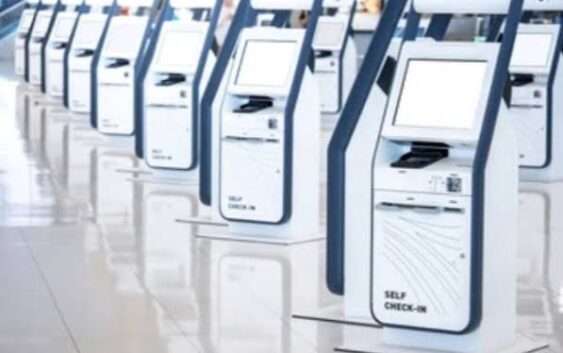
While the NCAA and NAMA periodically issue ultimatum threats or threaten to deny flight clearances to delinquent carriers, these reactive measures rarely yield full recovery. The manual and semi-automated collection mechanisms currently in place create room for under-reporting, ticket undervaluation, and friction between regulators and operators.
Automation of the TSC/CSC framework is not a mere IT upgrade; it is a structural economic game-changer.
An automated revenue collection platform integrated directly into global distribution systems (GDS), airline departure control systems (DCS), and central banking clearinghouses shifts the collection paradigm from post-flight settlement to real-time point-of-sale deduction.
For over a decade, the collection of the 5 per cent TSC/CSC has been dogged by operational opacity. Under standard civil aviation regulations, airlines collect this 5 per cent surcharge on every passenger ticket and cargo manifest on behalf of the government, holding it in trust before remitting it to the regulator.
Fierce battle
The resulting battle lines are drawn along existential arguments. The NCAA warns that diverting its primary revenue lifeline risks crippling regulatory oversight and compromising safety standards in Nigerian airspace.
NAMA, backed by its labour unions, counters that operating modern air navigation infrastructure from satellite surveillance to ageing radar networks demands urgent, expanded capital funding.
Yet, beyond the fierce legislative rhetoric, an uncomfortable operational truth remains largely unaddressed: both agencies are waging war over statutory percentages of a financial pipeline that is leaking billions of Naira every month due to a breakdown in automated collection systems.
The 5% TSC/CSC is not an airline tax; it is a statutory passenger levy collected by airline operators on behalf of government agencies.
Under standard global civil aviation framework models, these funds should automatically route through direct, real-time payment gateways into designated central accounts managed by the Central Bank of Nigeria (CBN) upon ticket issuance.
Instead, years of delayed integration, fragmented revenue-automation systems, and administrative inertia have allowed domestic carriers to collect these fees into their own operational bank accounts.
For many cash-strapped domestic airlines struggling with skyrocketing Jet A1 fuel prices, foreign exchange volatility, and high aircraft maintenance costs, these unremitted funds become an informal, interest-free operational float.
Tens of billions of Naira in accrued TSC/CSC revenues remain trapped in airline treasuries, leading to protracted reconciliation disputes, legal threats, and endless debt-recovery committees.
Tragedy
Not a few feel that the central tragedy of the TSC crisis is that the sector is starving while sitting on a heap of uncollected wealth. Agencies are fighting over revenue shares on paper while the airlines are using actual passenger monies as operational liquidity.
Without end-to-end, real-time automation linked directly to Global Distribution Systems (GDS) and local booking engines, manual auditing processes lag months behind.
By the time debt notices are issued, airlines have either re-invested the capital into daily operations or, in the worst cases, suspended operations entirely, leaving the government holding unrecoverable debts.
The NCAA, led by Director General of Civil Aviation Capt. Chris Ona Najomo, has pushed back vigorously against the proposed revenue redistribution, asking lawmakers to restore the agency’s historic statutory 65% share.
The regulatory body further argued that, unlike service providers that levy direct operational tariffs on aircraft operators, the NCAA relies on the 5% TSC/CSC for roughly 80% to 83% of its overall operating budget, International Civil Aviation Organization (ICAO) guidelines mandate that civil aviation authorities must maintain financial independence to conduct rigorous, uncompromised safety oversight, inspector training, and continuous audit programmes.
It further stated that the NCAA’s remaining revenue comes from cost-recovery fees for certifications and licenses, adding that depriving it of its core statutory share risks eroding the country’s ICAO safety audit standing.
NAMA’s counterplay
Conversely, advocates for NAMA highlight the staggering operational demands of managing sovereign airspace. Modernising air navigation services—transitioning to Performance-Based Navigation (PBN), upgrading Total Radar Coverage of Nigeria (TRACON) assets, and maintaining continuous ground-to-air VHF communications—requires massive, capital-intensive investments.
NAMA’s proponents argue about critical infrastructure strain, saying safe flight paths depend on uninterrupted, state-of-the-art navigation hardware; terminal and route navigation charges levied on airlines are frequently under-collected due to airline liquidity pressures, leaving the agency unable to finance generational technology shifts, and a higher share of the TSC/CSC is viewed by NAMA as a guaranteed buffer to backstop its technical operations.
However, the NCAA points out that NAMA already possesses 16 statutory commercial revenue streams, including en-route navigation charges, overflight fees, and landing/parking levies, accounting for roughly 75% of its total earnings, along with access to Bilateral Air Services Agreement (BASA) capital funds.
This claim was dismissed by the Managing Director of NAMA, Farouk Ahmed Umar, describing it as a blatant lie.
“He said, “I heard the DG of NCAA say that, and that is why I said it is very unfortunate. A regulator who is supposed to, in the first place, be the initiator of policies that will ensure adequate funding is the very one dishing out lies. When he said that, somebody from the background asked him to mention the 16 revenue streams”.
“I am managing the directorate; I am not aware of any. The only sustainable fund that is keeping us alive today is from IATA and then some interventions that intermittently come from government; it would have been an embarrassment for the Nigerian airspace agency”.
The Path Forward: Automation over legislative arbitrage
Re-slicing an under-collected levy will not resolve the structural cash deficits facing Nigeria’s aviation industry. Legislative energy focused on shifting percentage allocations addresses the symptom rather than the systemic flaw.
To secure the financial stability of both agencies and maintain airspace safety standards, experts recommend three key policy interventions such as mandatory point-of-sale automation in a way that the Ministry of Aviation and Aerospace Development and the National Assembly must enforce a central, automated payment gateway system.
Every domestic and international ticket issued must automatically split and remit the statutory 5% charge directly into the CBN account at the exact moment of transaction, completely bypassing airline accounts.
Last line
The ongoing battle over the TSC/CSC revenue distribution ratio is a symptom of a deeper malady: a reliance on outdated, leaky collection systems in an increasingly digital aviation ecosystem.
Google+