- Dangerous Game: Overwritten cockpit recorders, threat to air safety
- United Nigeria Airlines Injects N20m to Rescue Chinua Achebe Fiction Prize for 10 Years
- Minister petitions IATA over Osubi airport code ‘QRW’, orders airlines to drop ‘Warri’ label
- IATA and Africa: What Have You Done for Me Lately?
- N500bn Drain: Reclassifying NCAA as a cost-recovery body critical for safe skies



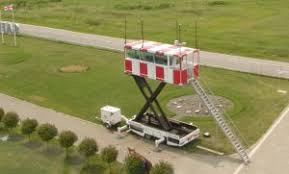
Mobile control tower ready for deployment at MMIA in few days, says NAMA
- AFTN restored, fully operational
The Nigerian Airspace Management Agency (NCAA) has explained why it has taken some time to deploy a mobile control tower at Lagos airport.
The agency, through its spokesman, Dr Abdullahi Musa, said in a statement that the installation of aviation control infrastructure cannot be undertaken in a hurried or improvised manner.

Contrary to the impression created in the media, Musa clarified that the aviation safety tool was ready for deployment and was expected to be in place within days of the mandatory curing period’s completion.
He hinted that the process underway at the Murtala Muhammed International Airport in Lagos reflects diligence rather than delay, responsibility rather than hesitation, and, above all, an uncompromising commitment to the safety of Nigerian airspace.
Such facilities, he explained, must comply with strict engineering and operational standards designed to safeguard aircraft operations.
Musa further explained that following the recent fire incident at the Aerodrome Control Tower of the Murtala Mohammed International Airport (MMIA), Lagos, NAMA immediately activated contingency measures to ensure the uninterrupted provision of air navigation services.
As part of these measures, the agency, he reiterated, initiated arrangements to deploy a mobile control tower as a temporary operational facility while restoration efforts on the main tower continue.
The location chosen for the mobile control tower, he further noted, must provide optimal visual coverage of the runway, taxiways and other critical portions of the airfield.
According to him, this requirement is essential to enable air traffic controllers to maintain effective situational awareness when managing aircraft movements on the ground and within the aerodrome environment.
His words, “Secondly, the identified location required excavation and structural casting to create a firm and stable foundation capable of supporting the tower infrastructure. Aviation installations demand structural stability to avoid any operational or safety risk.”
To him, engineering standards further require that the casting be allowed to cure for a minimum of twenty-one days before any heavy structure can be mounted on it.
“This curing period is a critical technical process intended to prevent cracks, instability or structural failure that could compromise the installation. Indeed, when NAMA initially prepared to deploy the mobile tower, the project contractors, China Civil Engineering Construction Company (CCECC), advised that the installation should not proceed until the foundation had fully settled, warning that premature deployment could damage the structure and undermine the entire work.”
“In the overriding interest of safety and in line with global engineering standards, NAMA responsibly adhered to this professional advice. It is therefore inaccurate to interpret the waiting period as operational delay.”
It is also important to state that air traffic control services at MMIA have remained uninterrupted. As an interim arrangement, the Fire Service Tower has been effectively utilised for Aerodrome Control operations pending the installation of the mobile tower.
Meanwhile, the Aeronautical Fixed Telecommunication Network (AFTN) has been fully restored and remains operational, with Aeronautical Information Service personnel currently working from the Total Radar Coverage of Nigeria (TRACON) complex.
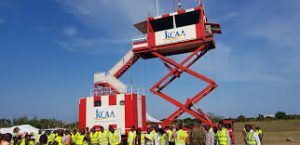
NAMA, he stated, remains firmly committed to the highest standards of aviation safety, professionalism, and operational excellence, stressing that aviation safety is sacrosanct and that every decision taken by the agency is guided by global best practices and the paramount objective of ensuring safe and economical air navigation in Nigeria.
Google+