- Turkish Airlines expands Lagos network with additional frequencies
- Achimugu's Latest Award: A Plus for NCAA, Nigerian Aviation
- Airlines to adjust schedules, divert to P'H, Enugu as FAAN shut Owerri Airport for runway repair work
- Air Peace takes delivery of E190 jet, breaks tradition on aircraft naming
- How mountain of debt is ‘grounding’ Nigeria’s aviation



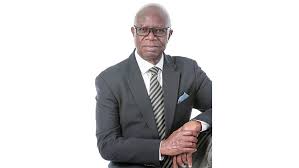
Excessive taxes, charges drive up costs, make travel expensive, says AASA CEO, Munetsi
- African carriers face more than $220 million in supply chain costs
The Chief Executive Officer of Airlines Association of Southern Africa (AASA), Aaron Munetsi, said airlines, airports, air navigation services, regulators and equipment suppliers all had a part to play in rewriting Africa’s aviation negative narrative and demonstrating that African carriers can hold their own globally.

This is coming as he lamented that Africa’s carriers face more than $220 million in additional supply chain-related costs this year alone, with a call that if governments genuinely want to democratise air transport, they should remove excessive statutory charges and taxes that have driven up costs, made ticket prices higher and pushed air transport beyond the reach of most Africans.

Addressing AASA’s 55th Annual General Assembly (AGA) in Lusaka, Zambia, Munetsi said for too long, African aviation has been underestimated — especially by Africans.
He further noted that Africa is home to 1.4 billion people, the world’s youngest population and a growing middle class, but with just 2.2% of the global air transport market share, “We are still idling on the runway”.
The group called for a bold, collective effort to democratise and liberate the continent’s aviation sector through a series of interventions, including harmonising regulations, opening markets to competition, stabilising the industry supply chain, financial discipline, governance, as well as fixing critical aviation infrastructure and related services.
Restoring confidence in Africa’s Skies, Munetsi outlined AASA’s multi-pronged strategy for boosting Africa’s air transport sector, such as safety and standards, adding that Africa must harmonise oversight and recognise mutual licensing and certification — as the EU did in the 1990s — to support SAATM implementation and improve efficiency.
On supply chain, he noted that the global shortage of aircraft and parts has severely affected African airlines. Manufacturers quote up to six-year delivery lead-times, which requires older, less efficient aircraft to be kept in service for longer.
For financial sustainability, he called on state-owned airlines to be run with accountability, cost discipline, innovation and partnerships to drive better financial performance.
Munetsi stated that despite Africa’s small 2% share of global aviation emissions, governments should be facilitating investments in locally produced sustainable aviation fuel, while their aviation infrastructure services should be improving operational procedures to help airlines reduce fuel burn and carbon emissions.
To him, empowering Africa’s youth, women, and innovators is key and requires investments in training, mentorship and inclusion, reiterating that in tandem, archaic protectionist practices and processes that restrict growth had to be stopped with governments rolling back excessive taxes and charges on air transport.
Munetsi raised concerns about operational inefficiencies and safety failures in South Africa, citing the ongoing suspension of over 200 instrument flight procedures by Air Traffic and Navigation Services (ATNS), which continues to disrupt airline operations and cost airlines millions of dollars in additional fuel, engine wear and maintenance, crew flight duty, flight operations support, customer compensation and reputational damage.
AASA is worried that the glacial pace at which airspace management failures are being addressed means the scale of the economic impact is not fully grasped.
“The failure to design, manage and maintain airspace cannot be dismissed as an ‘inconvenience’. It needs to be seen for what it is: an economic disaster which demands a commensurate emergency disaster response. The lack of urgency is reflected in the glacial pace at which approval renewals were being processed,” he emphasised.
AASA also called on governments to invest in digital border and customs systems and to relax restrictive visa regimes that deter travel.
It also wants to see Mozambique and other governments with foreign reserves release airlines’ blocked funds and let local airlines access foreign currency to purchase aircraft spare parts and cover other dollar-priced costs.
“African aviation’s success depends on collaboration and shared responsibility. It’s time to stop talking and start improving. Only by working together can we ensure Africa’s aviation sector finally takes off and becomes far more than a two-per cent player in the global market,” he concluded.
Google+