- Aisuebeogun at summit: Why Nigeria needs resilient transport system to survive external shocks
- Babalakin lauds Tinubu over 19 years BASL, FG dispute resolution, pledges mass job creation
- Air Peace strengthens leadership pipeline with key flight operations appointments
- Transport Summit Holds Friday
- What Abuja private jet door blowout reveals about aviation safety



Tweaking FAAN’s cargo tariffs after two decades
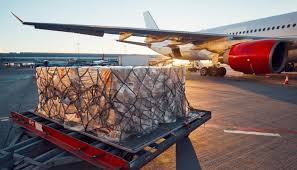
The Federal Airports Authority of Nigeria (FAAN) is set to implement a significant tariff adjustment effective February 2, 2026.
This move, which includes a notable 257% increase in cargo charges, is framed by the authority as a vital step toward financial self-sufficiency and infrastructure modernisation.


The agency’s expensive operational costs include runway, maintenance, airfield lighting, staff training and recurrent certification, environmental management (in line with ISO 14001 and the International Civil Aviation Organisation (ICAO standards), and customer service enhancements (in line with ISO 9001).
Each of these comes with rising costs. For example, ICAO now mandates advanced security screening technology, emergency response upgrades, and environmental impact controls.
These obligations require heavy capital expenditure—investment that FAAN cannot sustainably make without appropriate cost recovery.
Aviation is safety-critical, and airports must meet global benchmarks. Safety has a price. New charges will enable FAAN to invest in cutting-edge firefighting vehicles (CFTs), modern scanners and surveillance systems, airfield lighting and navigational aids, training for aviation security personnel, environmental protection systems and emergency operations centres.
More importantly, increased revenue will help FAAN maintain continuous audit readiness for ICAO, NCAA, and other regulatory assessments.
Most of FAAN’s cargo tariffs have not been reviewed since 2006.
During the same period, the Nigeria Customs Service adjusted rates more than 15 times, and ground handlers (such as NAHCO and SAHCO) updated their tariffs more than 20 times.
As an aviation professional, you likely recognise this as a pivotal moment for the industry’s fiscal structure.
Below is a feature-style breakdown of the imperatives behind the increase, balanced against the industry’s concerns.
Key Tariff Changes (Effective Feb 2, 2026)
|
Charge Category |
Old Rate (per kg) |
New Rate (per kg) |
% Increase |
|
Port Charges |
₦7 |
₦20 |
185% |
|
Air Cargo (Import/Export) |
₦5 |
₦15 |
200% |
|
Transhipment/Courier |
₦20 |
₦40 |
100% |
|
General Cargo Tariff |
₦7 |
₦25 |
257% |
Ending the 20-Year Freeze
The primary driver of the hikes is that many of FAAN’s tariffs have remained stagnant since 2006.
Over two decades, inflation and currency fluctuations have severely eroded the value for money of these charges.
While the Nigeria Customs Service, ground handlers, and agents have reviewed their rates multiple times, FAAN’s baseline has remained fixed, even though it is responsible for the runways, security, and terminal lighting that enable these businesses to operate.
FAAN has been excluded from the 2026 Federal Budget, reinforcing its status as a self-sustaining, revenue-generating organisation.
To maintain international standards, the agency requires capital for funding for critical projects like perimeter fencing, airfield lighting (Category III), and disabled aircraft recovery equipment.
The “Operation Go-Cashless” initiative and the deployment of automated, contactless payment systems across terminals require significant upfront investment to plug revenue leakages.
Strategic rehabilitation of the General Aviation Terminal (GAT) in Lagos, and a structured roadmap for Abuja’s cargo facilities.
Industry Pushback & Economic Concerns
Despite the justification, stakeholders like the Association of Professional Freight Forwarders and Logistics of Nigeria (APFFLON) warn of severe repercussions.
They view the 257% hike as “insensitive” in an economy already struggling with high operational costs, and they fear higher charges may discourage Nigerian exporters, making local goods less competitive globally.
These costs according to them are almost certain to be passed down, further increasing the price of air-shipped goods for the average Nigerian.
Tightrope
For FAAN, the increase is a non-negotiable step toward becoming a world-class, self-funded authority.
However, for the airlines and cargo agents you interact with, it represents another layer of multiple taxation that threatens the thin margins of the Nigerian aviation ecosystem.
Global Best Practices
Most countries review airport charges every 3–5 years. Nigeria has not done so in more than 20 years.
A top official of FAAN, who spoke to Aviation Metric Review, brings Nigeria closer to ICAO’s cost-recovery principles, sustainable airport management models, and Funding structures used by successful airport systems globally.
By adjusting charges, he noted that FAAN aligns Nigeria with models used in Europe, the Middle East, and Asia, where airports recover costs through transparent, regulated tariffs.
Catalytic support
The aviation sector contributes massively to job creation, tourism, commerce, and national GDP. FAAN’s ability to upgrade airports is directly tied to attracting more international airlines, making Nigeria a West African aviation hub, supporting air cargo and e-commerce, boosting local tourism, and improving regional connectivity, among other benefits. Without sufficient revenue, these opportunities remain under-exploited.
Transparent Process
For the upward review to succeed, FAAN must continue to engage airlines, ground handlers, freight forwarders, aviation workers, passengers, the media and government stakeholders.
Transparent communication ensures stakeholders understand that revised charges are not punitive; they are necessary investments in safer, more modern airports.
According to the authority, the imperative of new FAAN airport charges is clear: to enhance safety, modernise infrastructure, improve service quality, meet global standards, and make Nigerian airports competitive again.
Google+