- Infrastructure strain: Stakeholders push to hike NAMA’s ticket revenue share
- Delta Elevates the LAX Experience with New Delta One Lounge Expansion
- Bristow Group debuts Africa’s first oil & gas Airbus H160 in Nigeria
- Achimugu, Bags 2026/2027 African Brands Personality Award
- Beyond Revenue Sharing: Why Nigeria Must Strengthen NAMA's Funding for Safer Skies



MMIA rebuild, gross ANS neglect
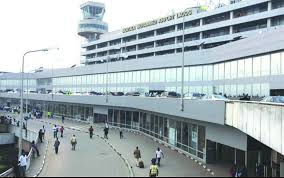
The plan by the Federal Government to build a brand-new international airport terminal in Lagos has been applauded. Still, the omission of air navigation infrastructure undermines the N712 billion investment in the project. An airport without ANS is a warehouse – a monument to incomplete strategy, writes WOLE SHADARE

The rebuilding of the Murtala Muhammed International Airport (MMA) Terminal One in Lagos initially came with its controversy, given what some described as ‘outrageous’.
The plan to spend N712 billion on a total overhaul of the terminal that has outlived its usefulness to many is a step in the right direction, considering how dilapidated the terminal has become and the shame it has conferred on Nigeria and Nigerians.
A visit to the MMA terminal reveals the seriousness the government has attached to giving the country a world-class airport facility.
No Nigerian airport is among the ten best airports in Africa despite the country’s huge aviation market and a burgeoning domestic aviation industry.
Missing from the global ranking
The 2025 best airports in Africa, ranked by Skytrax, are the Cape Town Airport, South Africa, and King Shaka International Airport, Durban, OR. Tambo International Airport, Johannesburg; three airports in South Africa that came first, second and third, respectively. Others are Cabablanca, Mauritius, Marrakech, Rwanda, Ethiopia and Nairobi.
Nigerian airports often receive low rankings due to a combination of factors, including poor infrastructure, inadequate facilities, and inefficient service delivery.
Many Nigerian airports suffer from outdated infrastructure, including dilapidated runways, inadequate terminal space, and poorly maintained equipment and navigational facilities.
Common problems include poor maintenance, non-functioning equipment like air conditioning, crowded and disorganised environments with touts, and issues with luggage handling, all of which fall short of both local and international standards
While some improvements have been made, issues like inadequate air conditioning, dysfunctional equipment, and overcrowding persist, impacting the overall passenger experience.
It would be recalled that in 2014, three Nigerian airports were rated among the worst in Africa. While the Murtala Muhammed International Airport, Lagos, was rated 10th worst in Africa, the Nnamdi Azikiwe Airport, Abuja and Port Harcourt International Airport, Port Harcourt, were ranked the seventh and sixth worst airports on the continent. Going by that ranking, Nigeria’s principal gateway airport in Lagos is the worst in Africa.
Automation
The key to getting Nigerian airports out of their present mess lies in investments in automation of most of the processes that deal with passengers and luggage, as well as in the general cleanliness of airports in the country.
Nigeria stands at an inflection point. The allocation of ₦712 billion to transform Murtala Muhammed International Airport (MMIA) into a world-class hub is visionary.
Exclusion
Yet, this investment carries a critical vulnerability: the exclusion of the Nigerian Airspace Management Agency (NAMA). This omission threatens to undermine every naira invested.
The decision by the management of NAMA to overhaul the country’s airspace infrastructure gives a fillip to the seriousness the Federal Government attaches to aviation infrastructure and the capacity to close the country’s aviation infrastructure gaps by commencing a comprehensive audit of the entire Kano Flight Information Region (FIR), also known as the Nigerian airspace.

The exercise which commenced last week Tuesday is a systematic self-assessment audit by the agency targeted at examining the overall safety performance, operational efficiency and regulatory compliance of the Nigerian airspace as well as strengthening NAMA’s readiness for the impending Air Navigation Service Provider (ANSP) Certification by Nigerian Civil Aviation Agency (NCAA) and the forthcoming ICAO Universal Safety Oversight Audit Programme (USOAP) Coordinated Validation Mission (ICVM) and Regional Office Safety Team (ROST) Mission.
ICAO divides the world’s airspace into Flight Information Regions (FIRs) to provide Air Traffic Services (ATS). Each FIR is officially recognised and published in ICAO documents and aeronautical charts.
FIRs are typically named after the city or location of the Area Control Centre (ACC) responsible for managing that airspace. The ACC is the central unit providing en-route air traffic control and coordination within the FIR.
Designating Nigeria’s airspace
Nigeria’s airspace is internationally designated by ICAO as the Kano Flight Information Region (FIR) because Kano was the country’s first international aviation hub and home to the pioneer Area Control Centre responsible for managing over-flight and en-route traffic. For continuity and global recognition, ICAO retained the name Kano FIR, and it today covers the entire Nigerian airspace as well as portions of the Gulf of Guinea delegated to Nigeria.
According to him, “This audit is a landmark initiative, the first of its kind in NAMA’s 25-year history, and it marks a bold and proactive step by the agency to reinforce its mandate of delivering safe, efficient, and seamless air navigation services in full alignment with international best practices.
An airport without advanced Air Navigation Services (ANS) is infrastructure without intelligence.
MMIA’s runways, terminals, and aprons are the body. The agency’s CNS/ATM (Communication, Navigation, Surveillance/Air Traffic Management) is the central nervous system. Without the latter, the former cannot function in the agency’s journey towards excellence in airspace management.
Strategic error, consequences
Allocating ₦712 billion exclusively to physical infrastructure while ignoring ANS violates ICAO’s fundamental principle of integrated aviation systems (ICAO Doc 9750), ignores global best practices (Dubai, Singapore, South Africa) where ANS receives 20–30% of major airport funding.
Over time, the country’s radars, especially the Total Radar Coverage of Nigeria (TRACON), are obsolete and unreliable communications increasing mid-air collision risks. Lagos TMA handles 60% of Nigeria’s air traffic with 1980s-era systems.
Without Category III Instrument Landing Systems (ILS), MMIA’s new runways will fail during harmattan – costing airlines ₦28 million/hour in delays (AON Data, 2023). Surface Movement Radar (SMR) gaps make runway incursions 47% more likely (NCAA Safety Audit, 2023).
Consequently, airlines lose $50M/year in fuel and delays due to ANS inefficiencies. Investor confidence erodes or collapses when airports lack ANS resilience could be likened to building Eko Atlantic City without sea walls, while building an airport without ANS is a catastrophe.
Experts’ views
An expert who spoke to Aviation Metric under strict conditions called on the Federal Government to reallocate 20% (N142 billion) of the entire Lagos airport terminal cost to NAMA to tackle decaying airspace infrastructure at many of the country’s airports.
The reallocation of funds to NAMA would help to replace or repair are Lagos ACC automation upgrade to prevent ATC bottlenecks at 40+flights/hours, CAT 3 ILS for MMIA runways to enable 24/7 all-weather operations.
Others are Surface Movement Radar (SMR) to eliminate runway incursions, ATCO recruitment and training to fill 42% staffing deficit and cyber security to prevent system-wide collapses.
He, however, called for a public dashboard tracking all ₦712bn expenditures (including NAMA’s portion) with the engagement of Independent auditors (PwC/Deloitte) validating milestones.
His words, “This is your chance to cement a legacy of integrated, safety-focused aviation transformation. The world is watching. For the Minister of Aviation and Aerospace Development, delivering MMIA as a true hub requires ANS. Excluding NAMA sets your vision up for public failure. Airlines’ profitability hinges on efficient airspace.”
“The ₦712 billion MMIA project is a down payment on Nigeria’s future. But an airport without ANS is a warehouse – a monument to incomplete strategy. Amend the allocation immediately to include allocation for NAMA to tackle airspace navigation infrastructure.”
Chief Executive Officer of Belujane Konsult, Mr. Chris Azu Aligbe, said NAMA has the right to call for an upgrade on facilities, stressing that this is necessary and should be taken.
 Air Navigation Service (ANS)
“The government needs to invest in aviation infrastructure beyond terminals. Not only terminals that make up aviation. They should bring these things to the public forum. They should let us know what type of airports they are building, the capacity of the airport after it has been completed. How many years are they projecting that this airport will last before we rebuild it again”?
Last line
MMIA’s runways, terminals, and aprons are the body. NAMA’s CNS/ATM (Communication, Navigation, Surveillance/Air Traffic Management) is the central nervous system. Without the latter, the former cannot function.
Google+
I really like reading through a post that can make men and women think. Also, thank you for allowing me to comment!
You should try a massage. Your body will feel amazing.